#JWST

Content tagged "JWST".

34 items (34 articles, 0 stories)

Articles

Neptune's Faint Rings Are Sharp Again for the First Time in 30 Years — Without Getting Closer

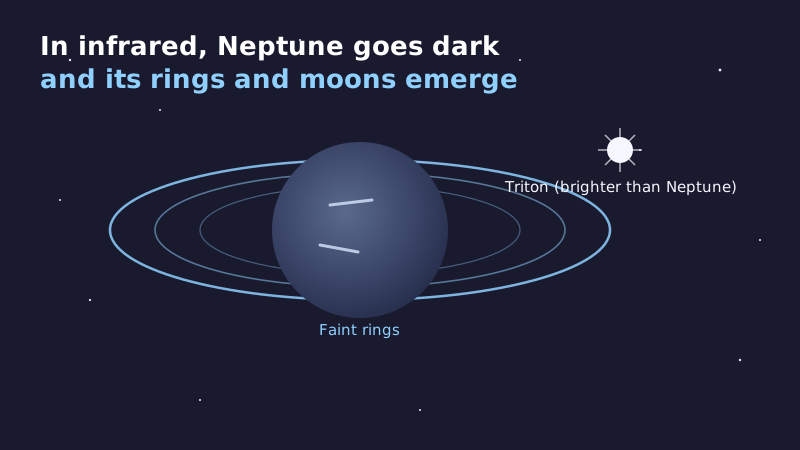
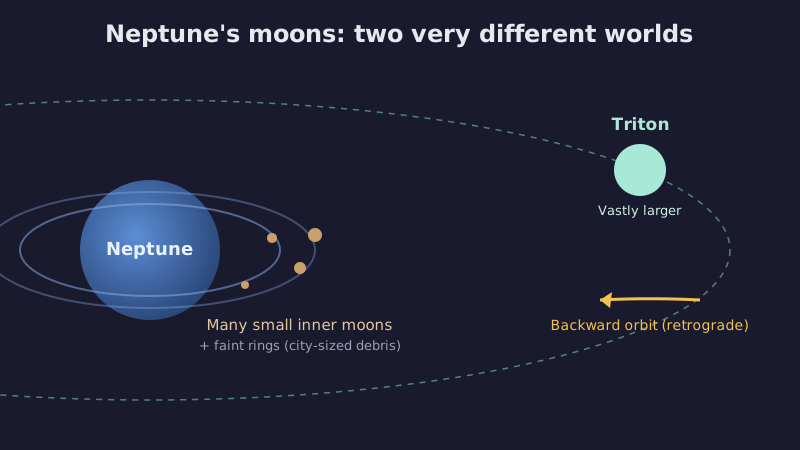
Voyager 2 caught Neptune's faint rings up close in 1989, and they've barely been visible since. Now JWST, sitting roughly 2.8 billion miles away, has spotted them again in infrared — with Neptune itself fading into the dark and its rings and seven moons popping into view. SORABUMI explains how staying farther away actually helped.

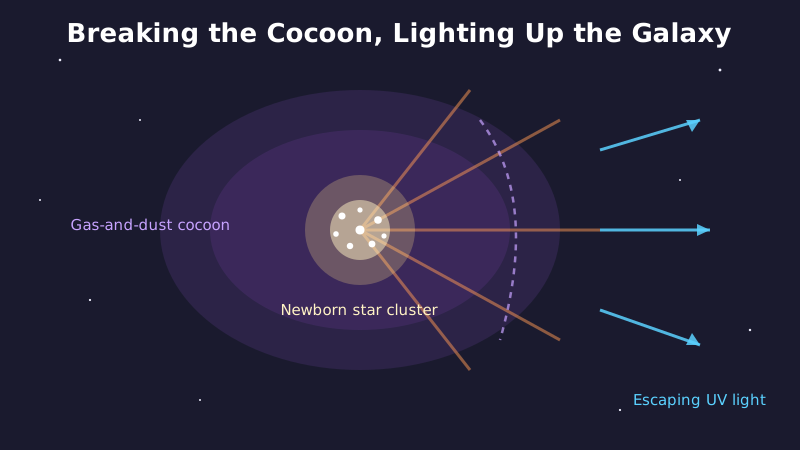
Heavier Star Clusters Break Out of Their Gas Cocoons Faster — and Flood Galaxies with UV Light

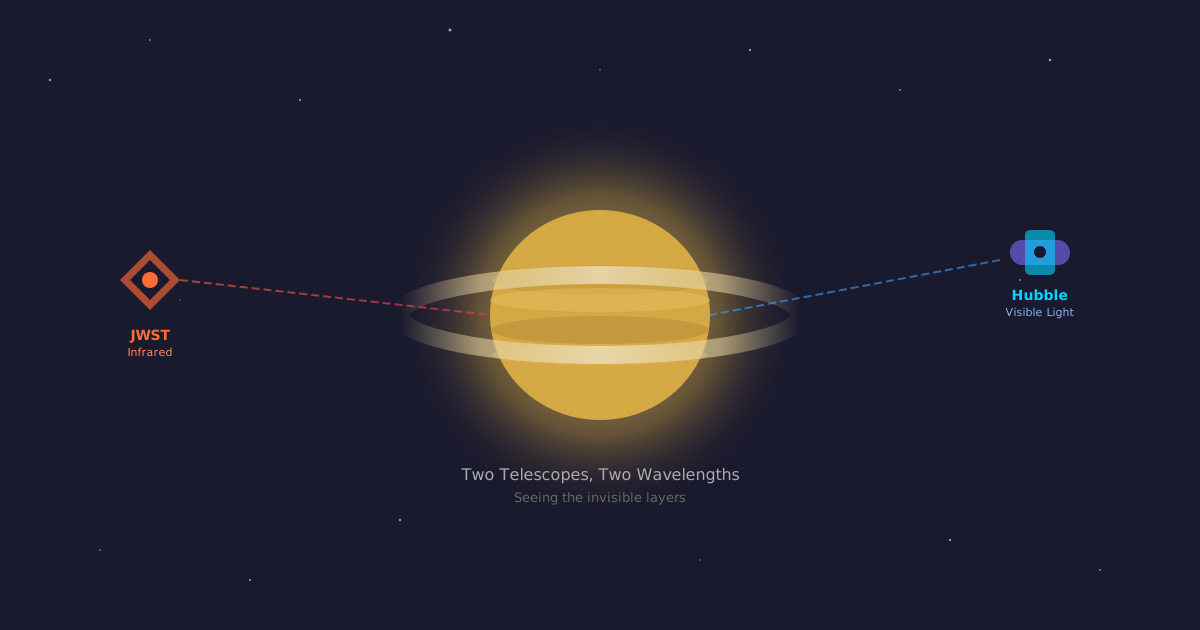
Newborn star clusters are wrapped in gas cocoons and invisible in optical light. A team led by Stockholm University combed through thousands of clusters with Hubble and JWST and found that massive clusters break free in about 5 million years, while lighter ones take 7 to 8 million — and the heavier ones are the first to light up their galaxy. SORABUMI explains.

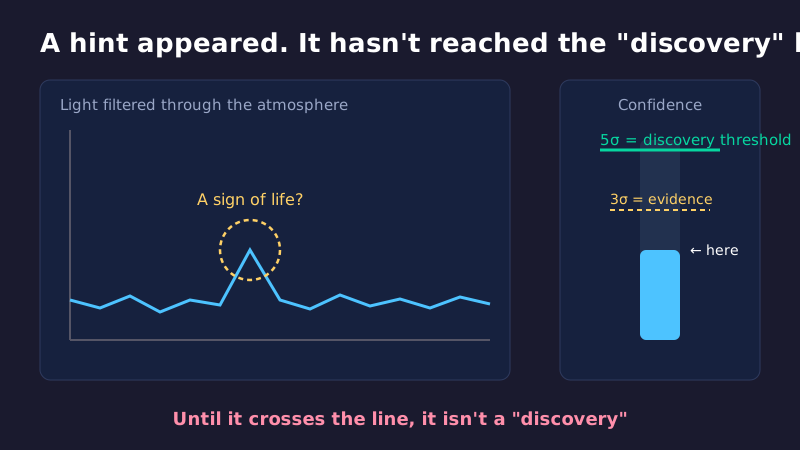
Why a Hint of Life Isn't a Discovery Until the Odds of a Fluke Drop Below 1 in 3.5 Million

When a possible sign of life turns up in an exoplanet's atmosphere, scientists don't celebrate right away. Until the chance of a fluke falls below roughly 1 in 3.5 million — the '5-sigma' threshold — and until they've finished doubting their own wishful thinking, it isn't a 'discovery' yet. SORABUMI explains the yardstick of scientific confidence and why researchers hold their excitement in check.

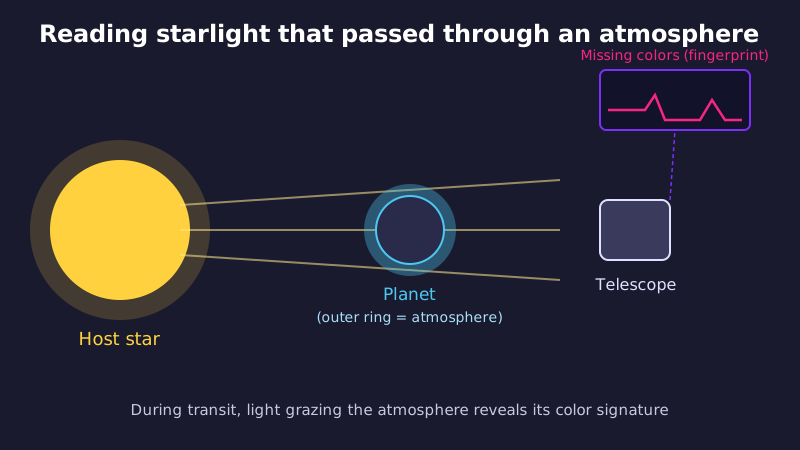
How Scientists Detect Air on Planets Dozens of Light-Years Away

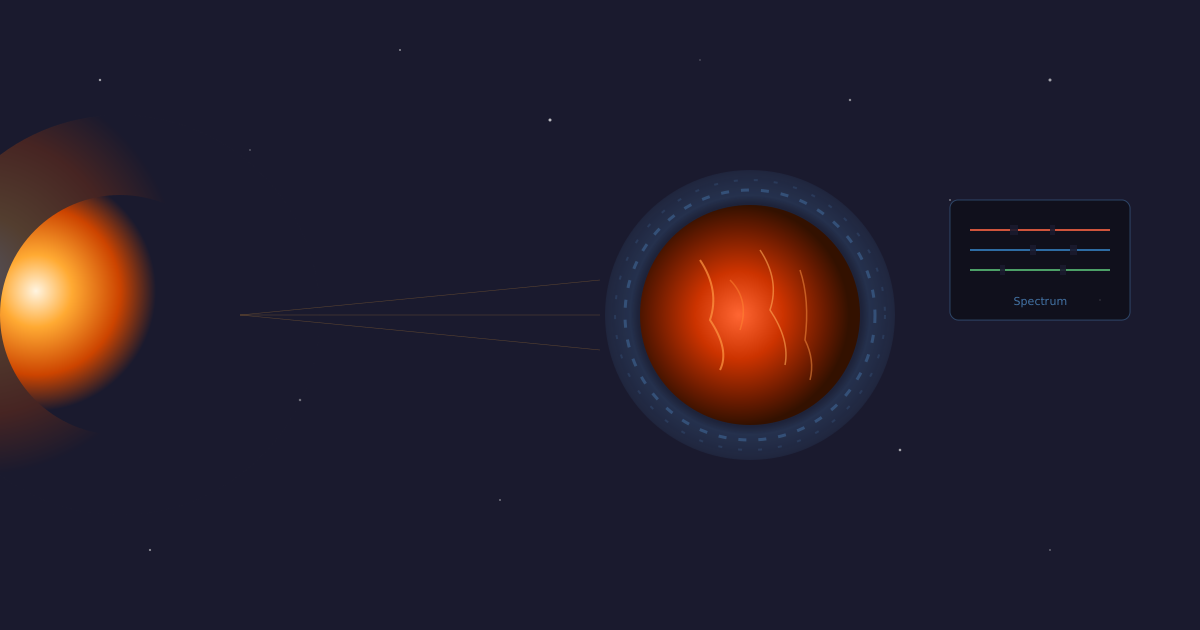
How can we tell whether a rocky planet dozens of light-years away has an atmosphere? For a few hours, as the planet crosses in front of its star, starlight grazes its air and comes out with a few colors missing. SORABUMI explains how transit spectroscopy reads that 'color fingerprint,' and why the clue shrinks to the thickness of an apple peel once you're talking about an Earth-sized world.

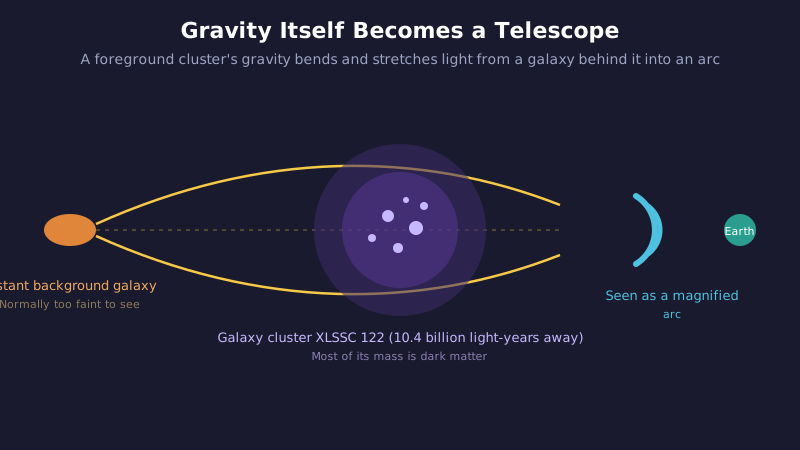
When Gravity Itself Becomes a Telescope: The 'Too-Early' Cluster 10.4 Billion Light-Years Away

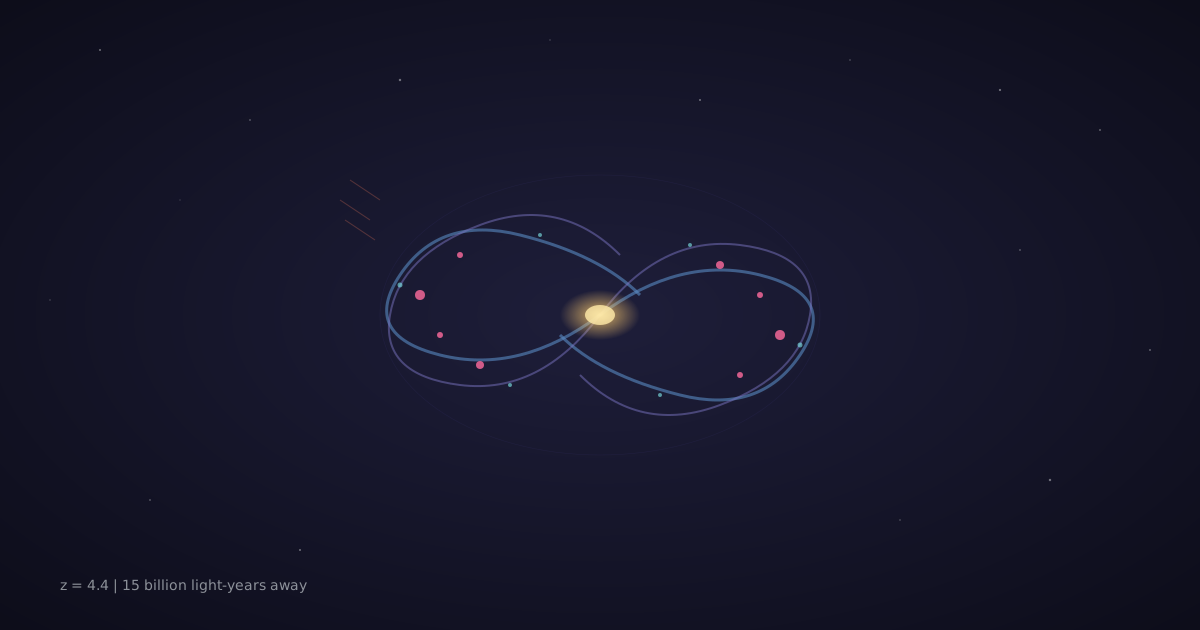
In 2026, JWST confirmed that the galaxy cluster XLSSC 122, some 10.4 billion light-years away, is producing powerful gravitational lensing. SORABUMI explains how a foreground cluster's gravity bends and magnifies light from behind it, and why this densely packed cluster shouldn't have existed so soon.

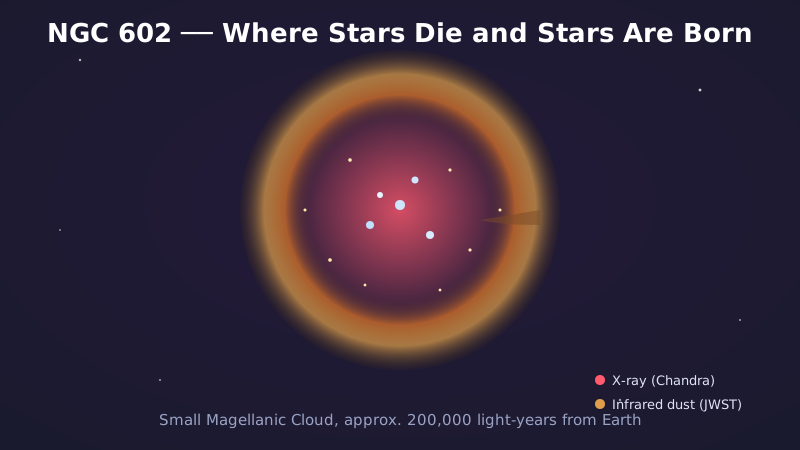
Where Stars Die and Stars Are Born: NGC 602, the Cosmos's Wreath

About 200,000 light-years away, in a corner of the Small Magellanic Cloud, NGC 602 is a star cluster where the death of massive stars and the birth of new ones play out in the same place, at the same time. What JWST and Chandra captured together looks like a cosmic wreath — and it doubles as a window into what the early universe was like.

← See all tags