Stars and Galaxies

From stellar birth to death, from the Milky Way to the large-scale structure of the universe.

37 articles

Articles

The Night Sky Is a Collage of the Past — We've Never Seen the Universe's 'Now'

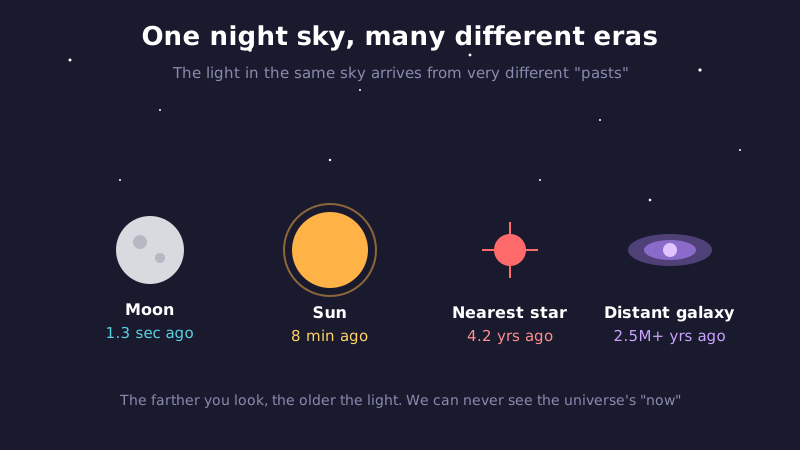
Sunlight left the Sun about eight minutes ago. Light from Proxima Centauri, our nearest star, is about 4.2 years old. The Andromeda Galaxy's light is roughly 2.5 million years old. Because light speed is finite, looking farther always means looking further back in time. SORABUMI translates this into everyday scale to explain why a single glance at the night sky holds hundreds of millions of years at once.

Galaxies Are Wrapped in a Hidden Sea of Hot Gas Far Bigger Than Their Stars

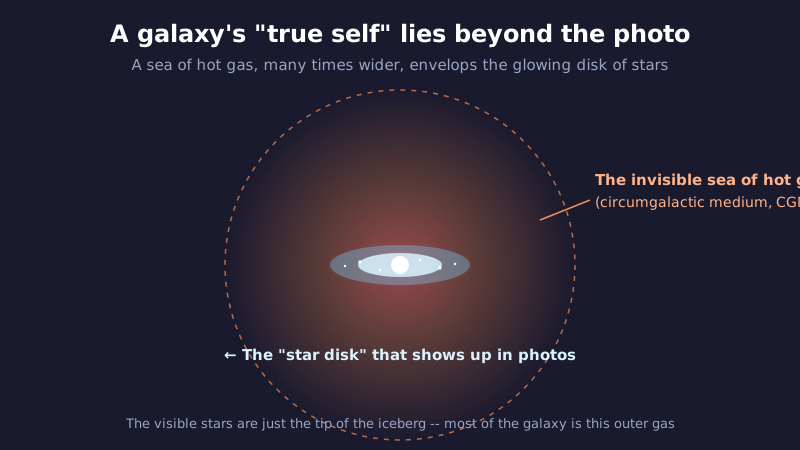
A galaxy in a photograph looks like a cluster of stars, but the real thing extends far beyond that: a diffuse cloud of gas, wider than the visible galaxy, that supplies the raw material for future stars. NASA's small satellite ASPERA is designed to catch this invisible gas in ultraviolet light, and SORABUMI explains how galaxies grow by inhaling and exhaling it.

The Invisible Black Hole That Fast-Moving Stars Gave Away

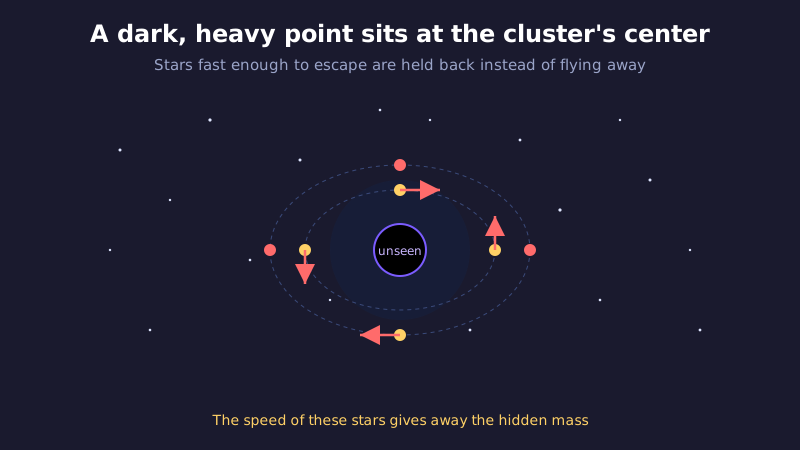
How do you find a black hole you can't see? At the center of Omega Centauri, seven stars are moving fast enough to escape the cluster — yet they never leave. That contradiction points to an intermediate-mass black hole with at least 8,200 times the Sun's mass. SORABUMI breaks down how two decades of Hubble images uncovered it.

Heavier Star Clusters Break Out of Their Gas Cocoons Faster — and Flood Galaxies with UV Light

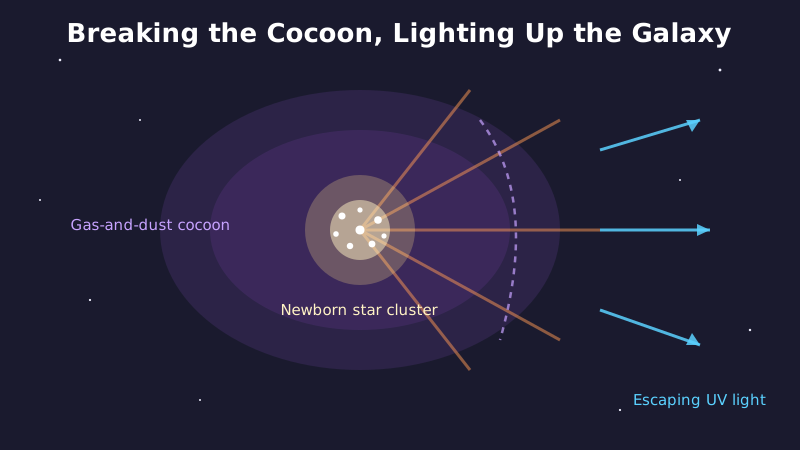
Newborn star clusters are wrapped in gas cocoons and invisible in optical light. A team led by Stockholm University combed through thousands of clusters with Hubble and JWST and found that massive clusters break free in about 5 million years, while lighter ones take 7 to 8 million — and the heavier ones are the first to light up their galaxy. SORABUMI explains.
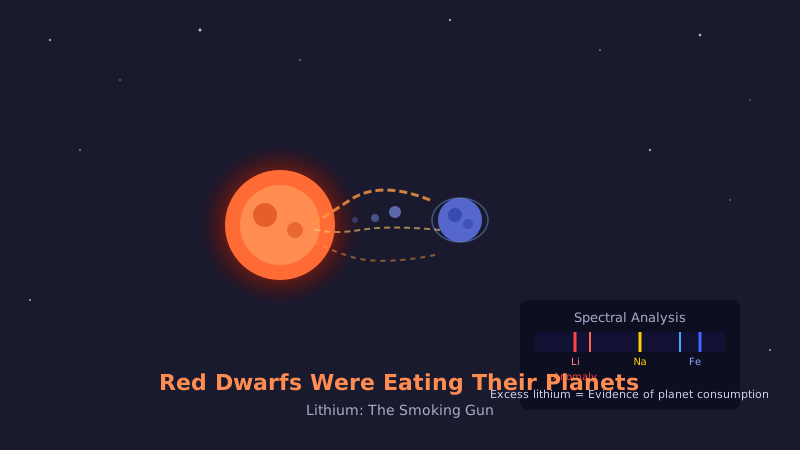
When Gravity Itself Becomes a Telescope: The 'Too-Early' Cluster 10.4 Billion Light-Years Away

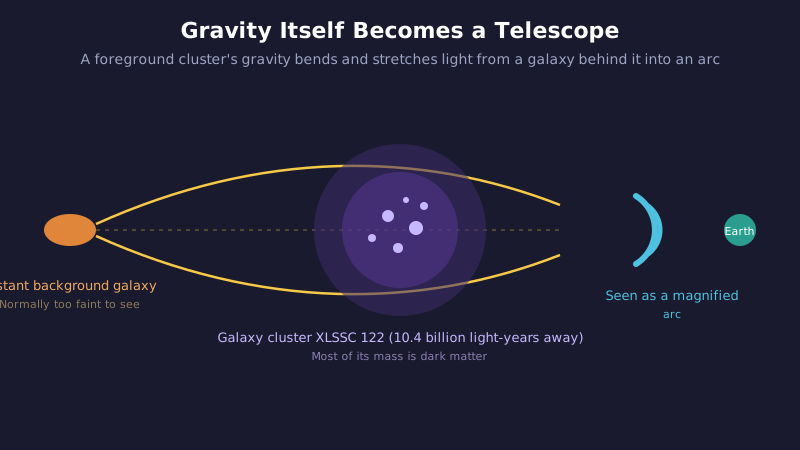
In 2026, JWST confirmed that the galaxy cluster XLSSC 122, some 10.4 billion light-years away, is producing powerful gravitational lensing. SORABUMI explains how a foreground cluster's gravity bends and magnifies light from behind it, and why this densely packed cluster shouldn't have existed so soon.

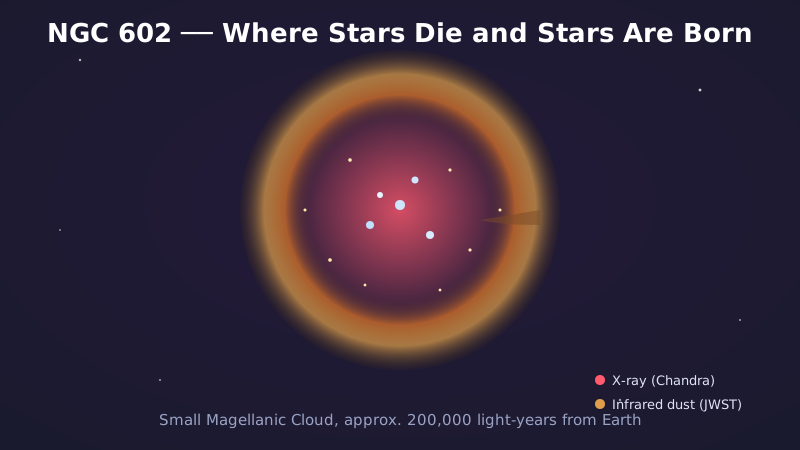
Where Stars Die and Stars Are Born: NGC 602, the Cosmos's Wreath

About 200,000 light-years away, in a corner of the Small Magellanic Cloud, NGC 602 is a star cluster where the death of massive stars and the birth of new ones play out in the same place, at the same time. What JWST and Chandra captured together looks like a cosmic wreath — and it doubles as a window into what the early universe was like.

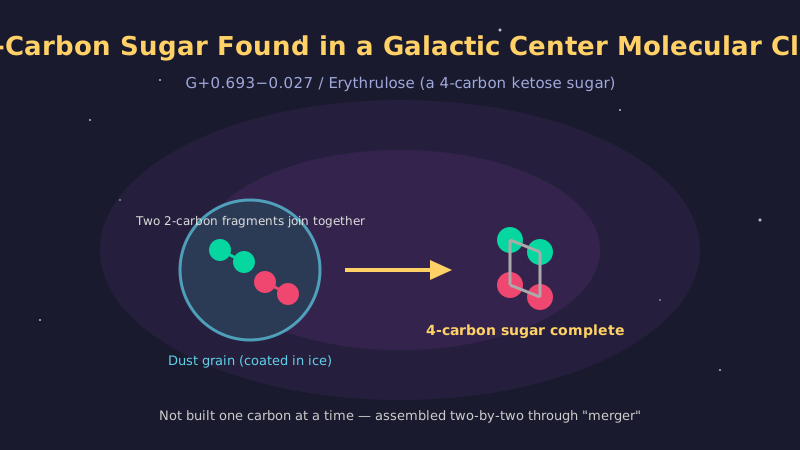
A 4-Carbon Sugar Found in Interstellar Space — A Candidate Ancestor of DNA

Erythrulose, a 4-carbon sugar, has been detected for the first time in the molecular cloud G+0.693−0.027 near the galactic center. It could be the raw material for TNA, a simpler genetic molecule than DNA. Even more surprising: the sugar wasn't built one carbon at a time — it formed by snapping two 2-carbon fragments together.

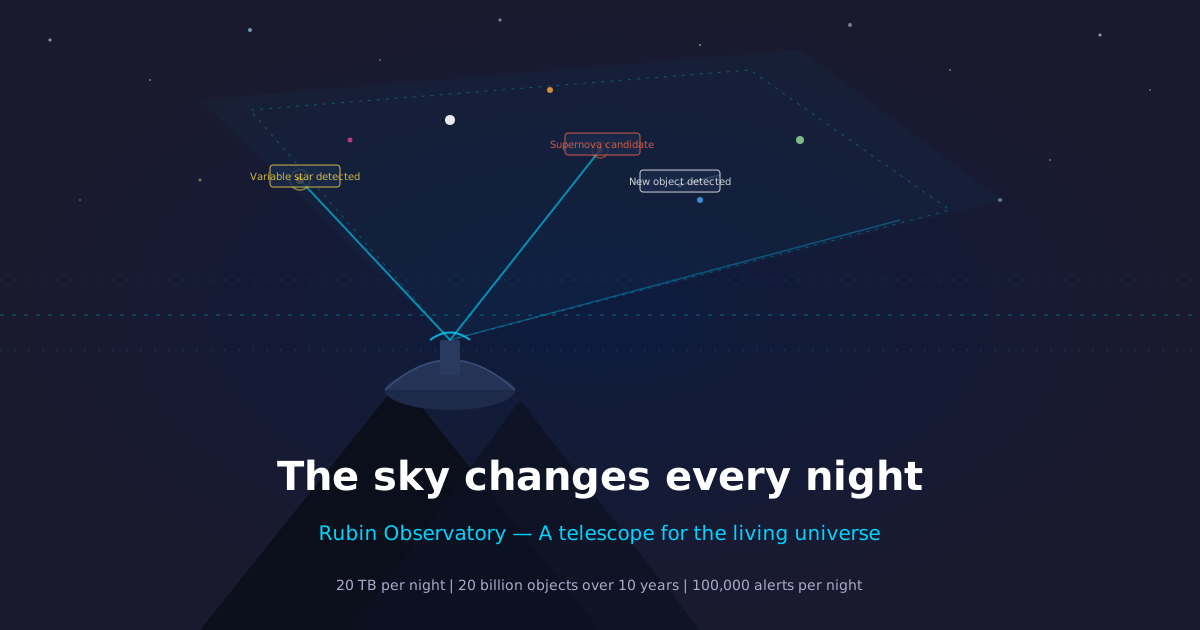
The Telescope That Photographs the Entire Sky Every Night — How Rubin Observatory Is Rewriting Astronomy

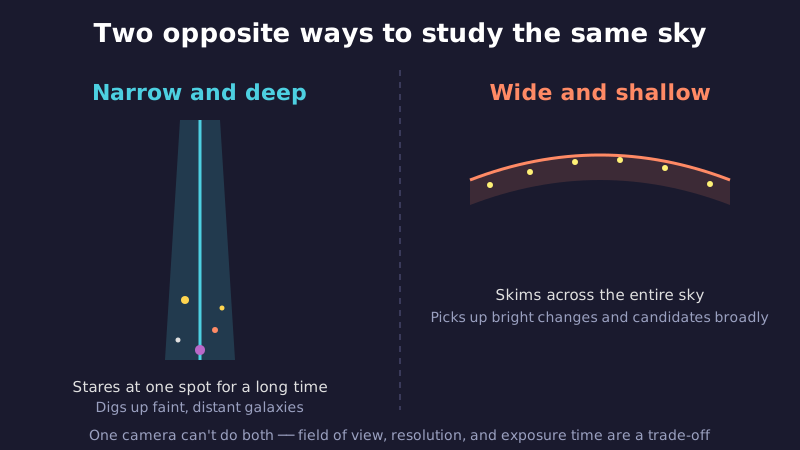
Starting in 2026, Rubin Observatory photographs the entire southern sky every 3–4 days and fires off around 100,000 change alerts each night. For the first time, astronomers have a systematic record of everything that flickers, explodes, or moves when no one is watching. Here's what that means for astronomy.