#exoplanets

Content tagged "exoplanets".

31 items (31 articles, 0 stories)

Articles

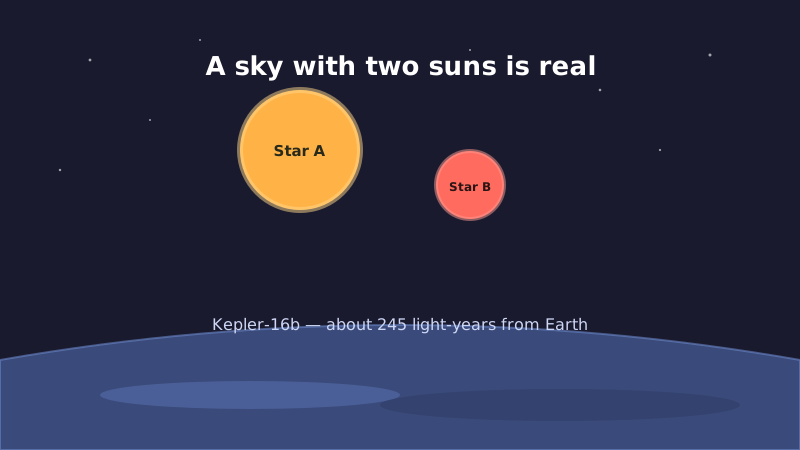
A Sky With Two Sunsets Is Real: The Planet That Orbits Two Stars at Once, 245 Light-Years Away

The 'twin sunset' sky from Star Wars isn't just movie magic. Kepler-16b, a Saturn-sized gas planet 245 light-years away, orbits a pair of stars that circle each other every 41 days — completing its own lap around both of them every 229 days. It survives the double gravity simply by keeping its distance.
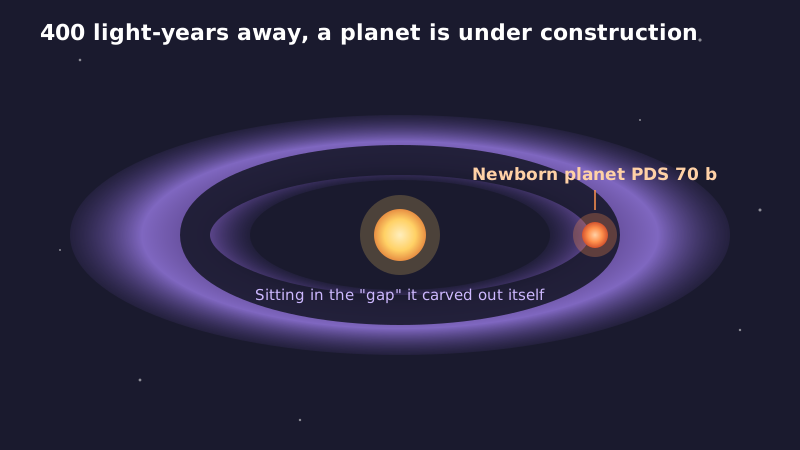
Caught in the Act: The First Direct Photo of a Planet Being Born in a Disk Gap

Around PDS 70, some 400 light-years away, a gas-giant planet several times Jupiter's mass is still gathering material inside a gap it carved in the star's disk. Its surface runs about 1,000°C, and it orbits roughly as far out as Uranus does from the Sun. This isn't a 'candidate' — it's the first time anyone has caught a planet mid-construction in a single clear image.

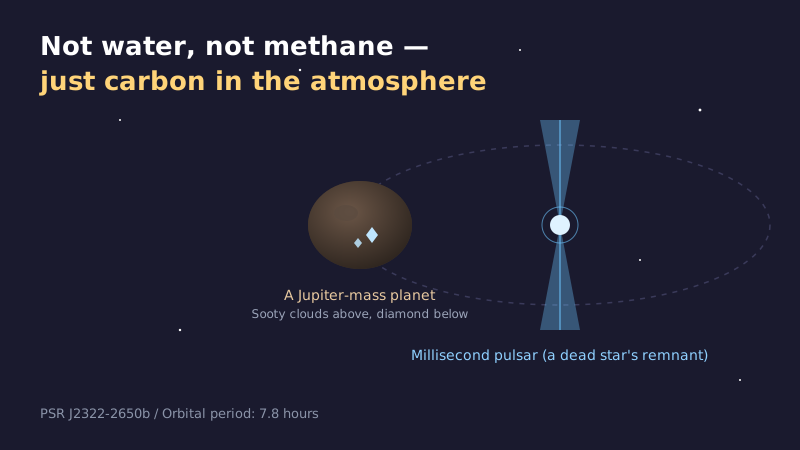
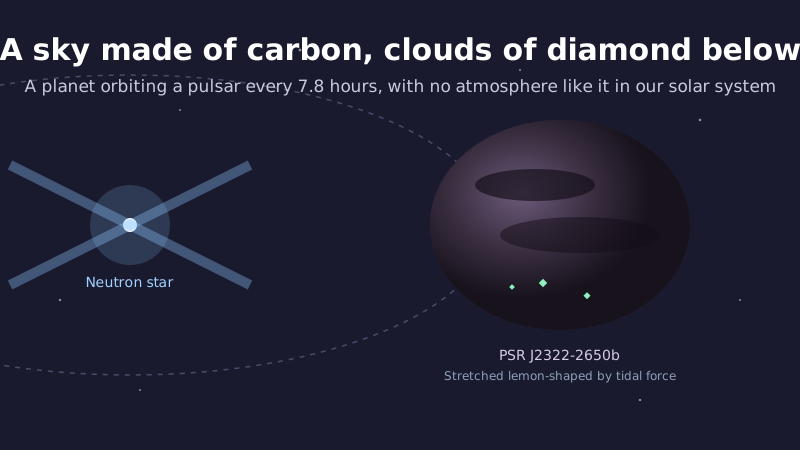
A Sky Made of Carbon With Clouds of Diamond: The Exoplanet That Breaks Every Rule

A Jupiter-sized planet circles a pulsar once every 7.8 hours. Its sky is made of helium and carbon, with no water or methane in sight. Daytime highs hit around 2,000°C, and deep in the atmosphere, carbon is thought to crystallize into clouds of diamond. Nobody can explain how it formed. JWST has found a sky unlike anything else in the solar system.

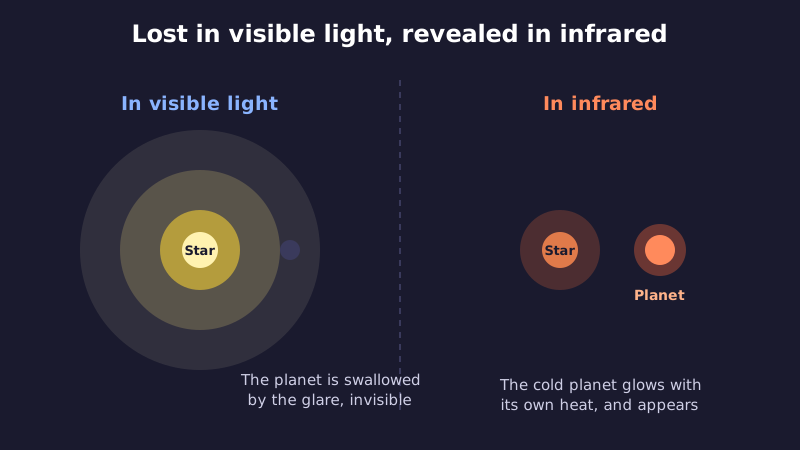
How Astronomers Find Planets That Never Give Off a Single Photon of Light

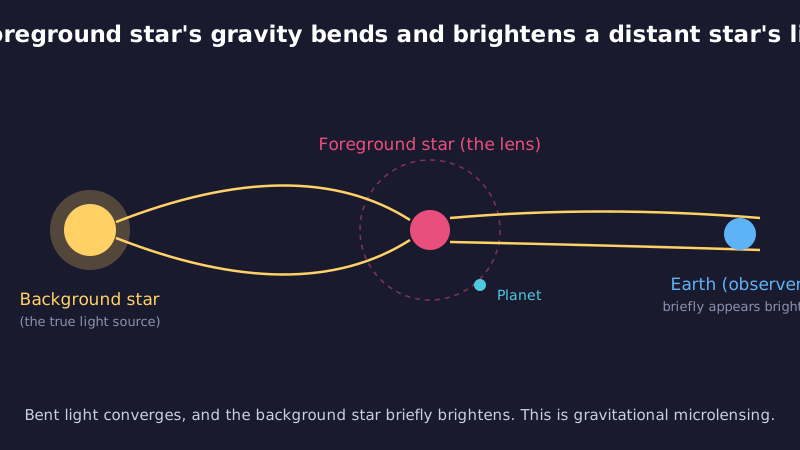
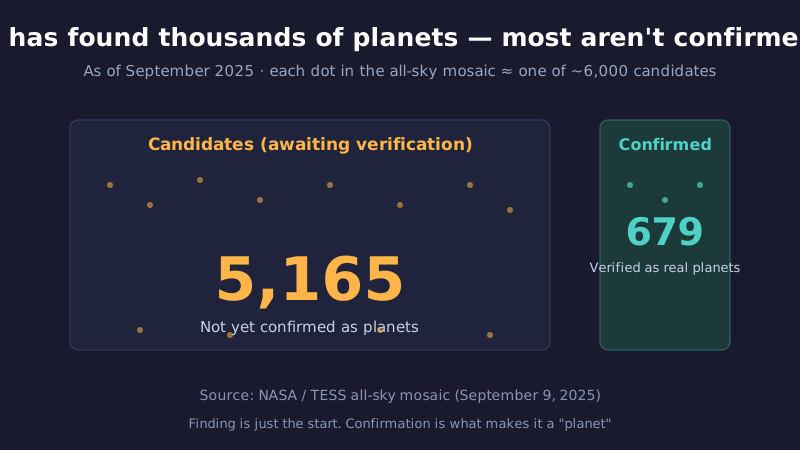
Planets don't shine on their own, yet astronomers have already confirmed more than 6,000 beyond our solar system. Some are found when a foreground star's gravity briefly bends and brightens the light of a star behind it, revealing a hidden world in the distortion. The Roman Space Telescope, with a field of view 100 times wider than Hubble's, is about to make this technique the main event.

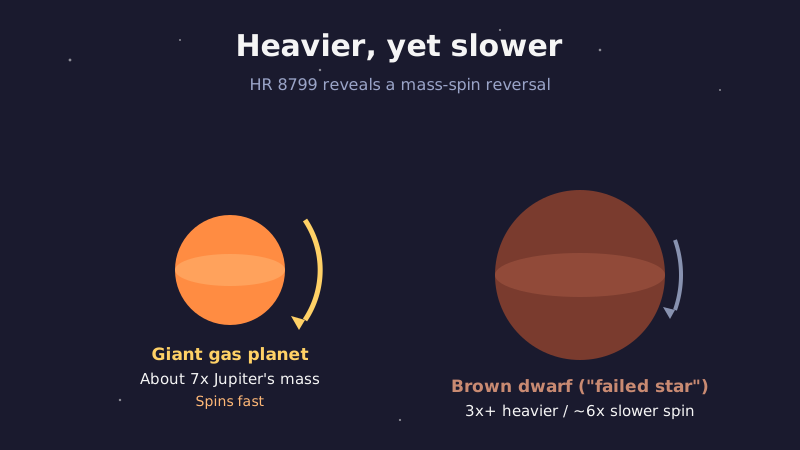
Giant Planets Spin Faster Than 'Failed Stars' — A Surprising Mass-Spin Reversal

Keck Observatory's KPIC instrument measured the spin of giant gas planets and brown dwarfs ('failed stars') using spectroscopy. In the HR 8799 system, the brown dwarf — more than three times heavier — rotates about six times slower than its lighter planetary neighbor. The likely culprit: a newborn planet's magnetic field braking against its birth disk, offering a new way to tell planets and stars apart.

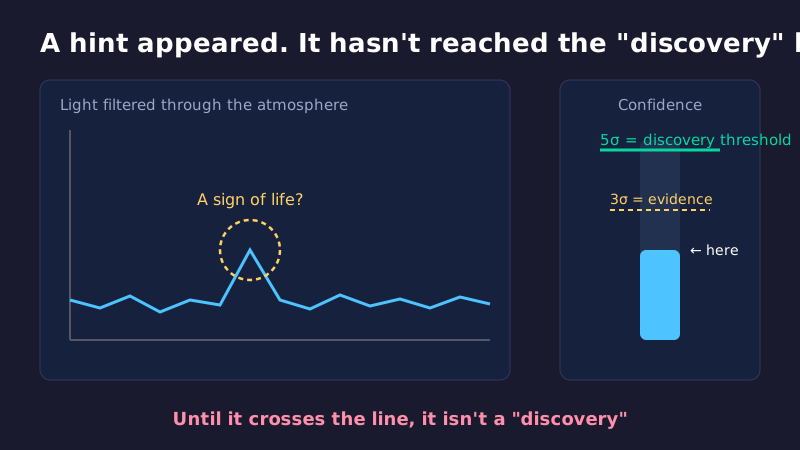
Why a Hint of Life Isn't a Discovery Until the Odds of a Fluke Drop Below 1 in 3.5 Million

When a possible sign of life turns up in an exoplanet's atmosphere, scientists don't celebrate right away. Until the chance of a fluke falls below roughly 1 in 3.5 million — the '5-sigma' threshold — and until they've finished doubting their own wishful thinking, it isn't a 'discovery' yet. SORABUMI explains the yardstick of scientific confidence and why researchers hold their excitement in check.

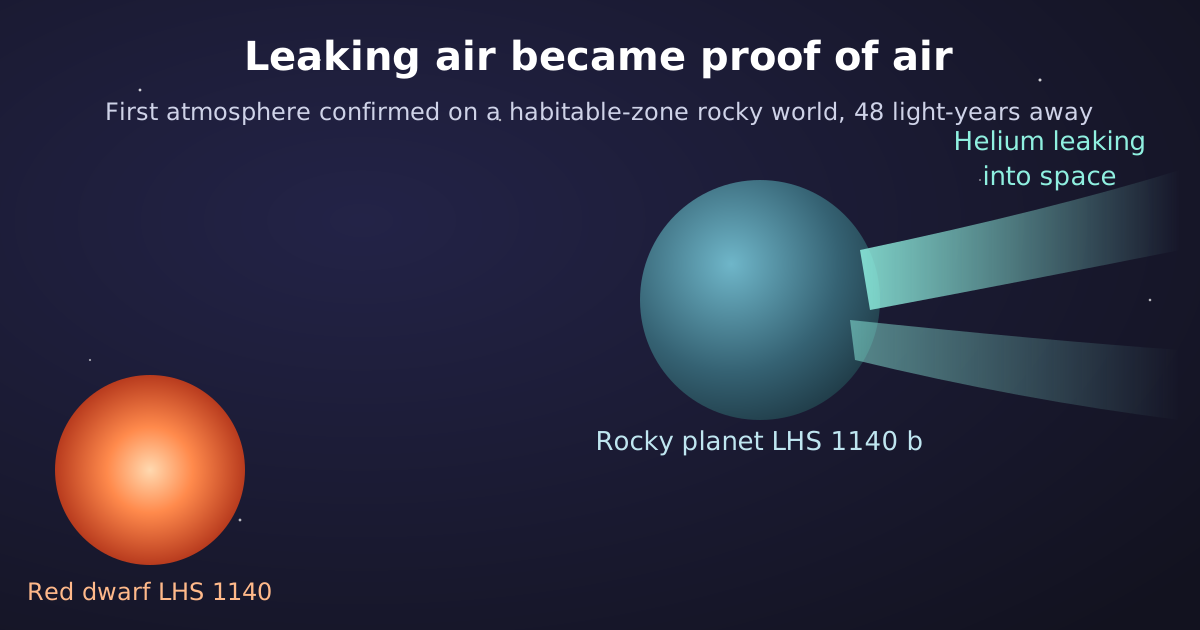
Being in the Habitable Zone Doesn't Guarantee Air: The 'Cosmic Shoreline' That Separates Planets

GJ 3378 b, a super-Earth found 25 light-years away, sits right in the middle of its habitable zone, soaking up about 90% as much starlight as Earth gets from the Sun. But the real test for finding life isn't distance — it's whether a planet can hold onto its atmosphere. SORABUMI explains the new yardstick astronomers call the cosmic shoreline.

A 'Potentially Habitable' Planet Found Just 28 Light-Years Away — The Discovery of Ross 318 b

Astronomers have discovered a super-Earth orbiting the red dwarf Ross 318, a mere 28 light-years from Earth. With six times our planet's mass, it sits inside the habitable zone where liquid water could exist — and hints of an atmosphere make it one of the most compelling nearby finds in years.

← See all tags