All Articles

All 193 articles, newest first

Latest articles

Gold Isn't Forged in Stars Like the Sun — It Took a Neutron Star Collision to Make Your Ring

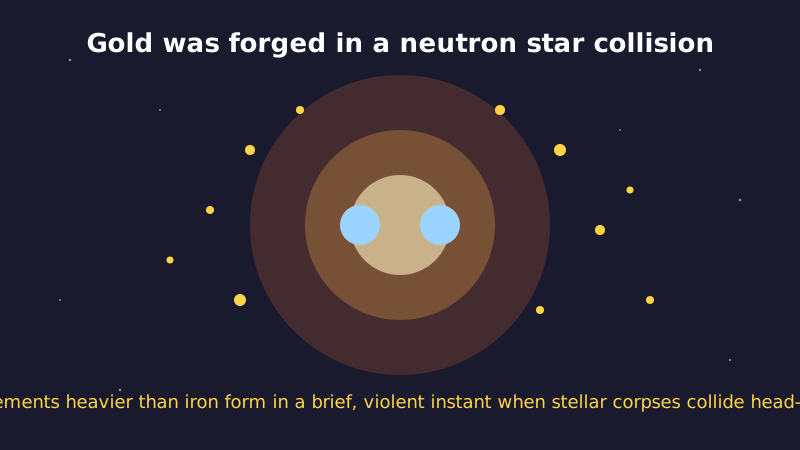
The gold atoms in that ring on your finger couldn't have been made inside a star like the Sun. Elements heavier than iron only form in bulk during the brief, violent instant when two neutron stars collide. On August 17, 2017, humanity caught that event as light, 130 million light-years away. The gold you're wearing is debris from a star that died long ago.
Why Planets Go Round but Asteroids Stay Lumpy: Gravity vs. Material Strength

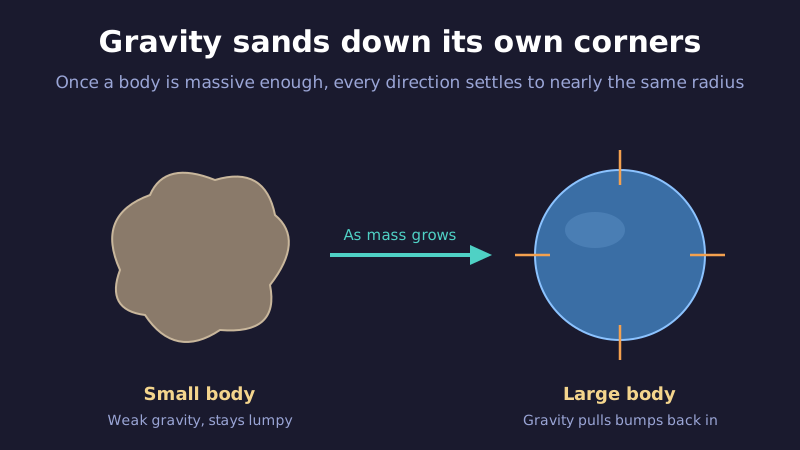
The asteroid Vesta is roughly 530 km across, yet it's a craggy, irregular lump. Saturn's moon Mimas, at just 394 km, is nearly a perfect sphere. The line between round and lumpy isn't just about size — it also depends on whether a body is made of rock or ice. Once a body gets heavy enough, its own gravity sands down every bump until it settles into a sphere.

Why Your Map App Isn't Off by 10 km a Day: The Clock Fix Hiding in Your Pocket

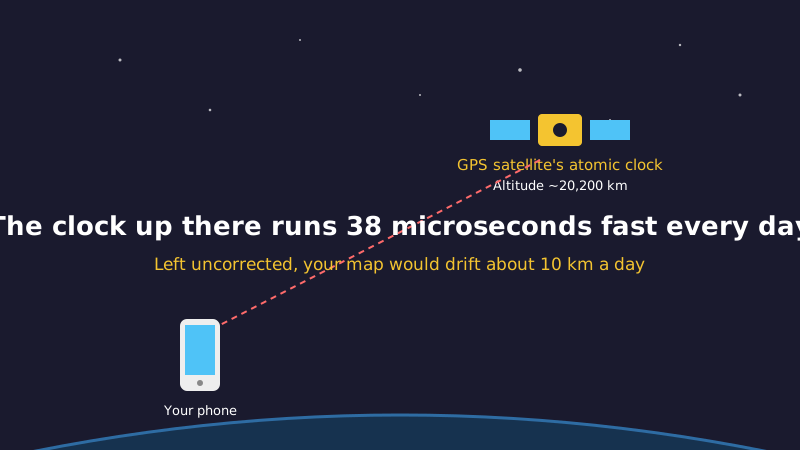
Your phone's location depends on the clocks aboard GPS satellites 20,000 km overhead. Relativity makes those clocks run 38 microseconds fast every day, enough to throw your map off by about 10 km if nobody corrected it. So engineers build the satellites to run deliberately slow before they even launch. Einstein, it turns out, helps you find your way every single morning.

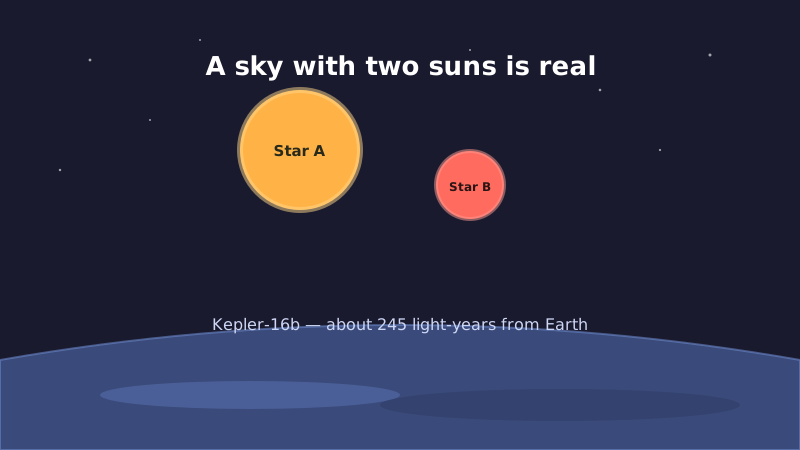
A Sky With Two Sunsets Is Real: The Planet That Orbits Two Stars at Once, 245 Light-Years Away

The 'twin sunset' sky from Star Wars isn't just movie magic. Kepler-16b, a Saturn-sized gas planet 245 light-years away, orbits a pair of stars that circle each other every 41 days — completing its own lap around both of them every 229 days. It survives the double gravity simply by keeping its distance.

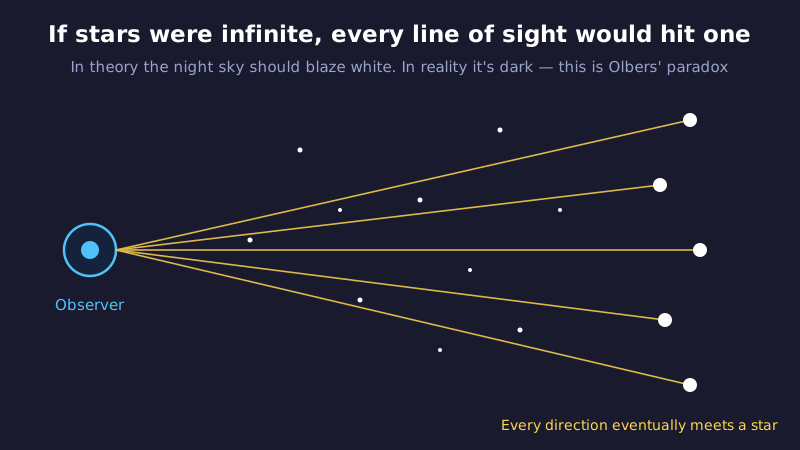
If Stars Were Infinite, the Night Sky Should Be Blinding White. It's Dark Because the Universe Has a Beginning — and Is Expanding

If the universe held infinite stars, every line of sight should eventually hit one, and the sky should blaze white. It stays dark because the universe is roughly 13.8 billion years old — so light from the most distant stars hasn't arrived yet — and because expansion stretches the light that does reach us into wavelengths we can't see. The whole sky is still glowing, in fact, just as invisible microwaves at 2.7 degrees above absolute zero.

Black Holes Have a Lifespan, Too — and the Smaller Ones Burn Hot and Die Fast

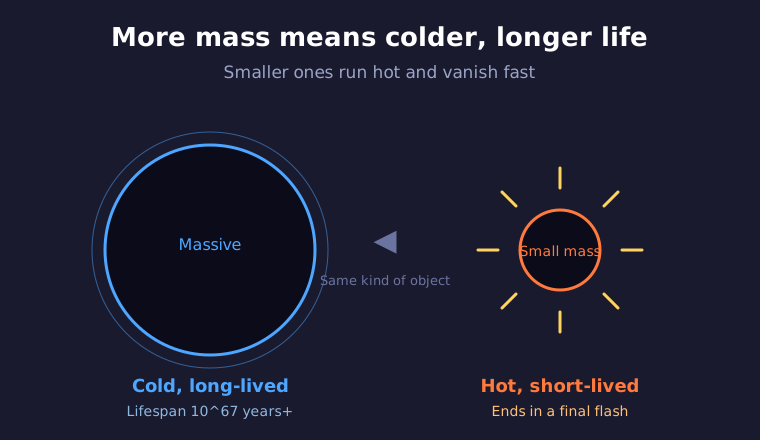
Black holes look eternal, but physics says otherwise. Add mass and they get colder and live longer; shrink them down and they run hot, violent, and brief, ending in a burst of light. Even a sun-sized black hole would take roughly 10^67 years to fully evaporate — a span that makes the universe's 13.8-billion-year history look like nothing at all.

Four Lights by Jupiter Kept Rearranging Every Night — and Ended an Earth-Centered Universe

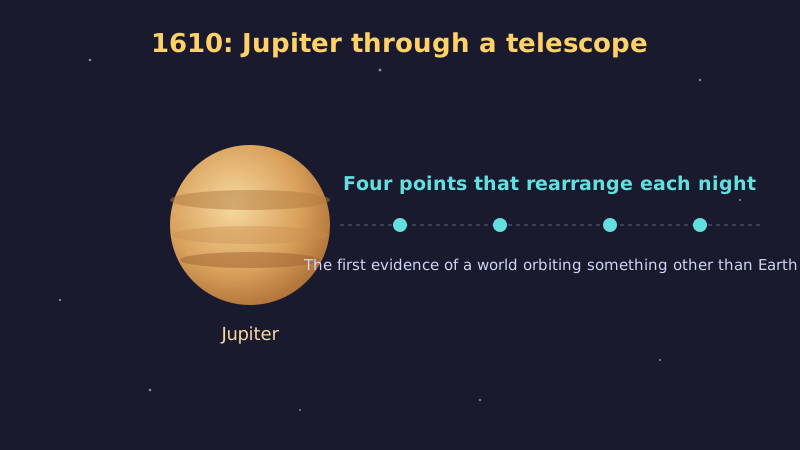
In the winter of 1610, Galileo spotted four tiny points of light next to Jupiter, and their arrangement kept shifting from one night to the next. It was the first evidence that something other than Earth could have objects orbiting it, and a few weeks of notes toppled a 2,000-year-old assumption about the shape of the universe. You can still see those same four points next to Jupiter through a pair of binoculars.

Why Red Stars Are Cooler Than Blue Ones: Star Color as a Temperature Gauge

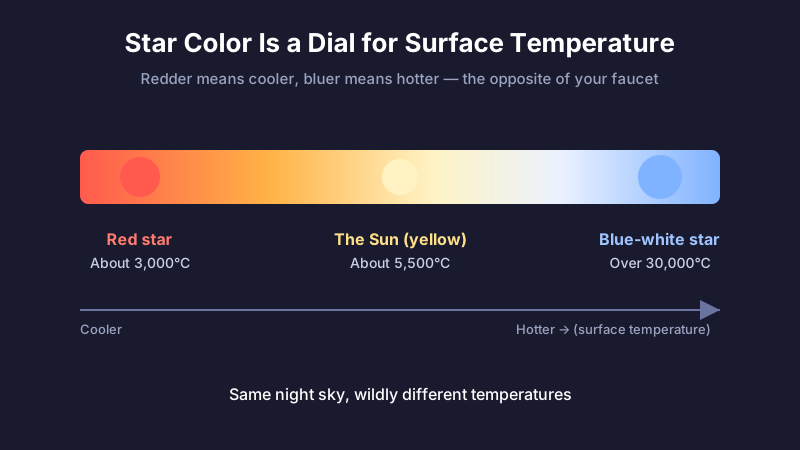
On a faucet, red means hot water and blue means cold. In the night sky, it's the reverse: red stars sit at a relatively cool 3,000°C, while blue-white stars blaze past 30,000°C. The Sun, a yellow star, lands right in between at about 5,500°C. Star color isn't a matter of style — it's a direct readout of surface temperature, one you can see with your own eyes in Orion's red Betelgeuse and blue Rigel.

If the Moon Vanished, Our Days Would Stop Growing and the Seasons Would Spin Out of Control

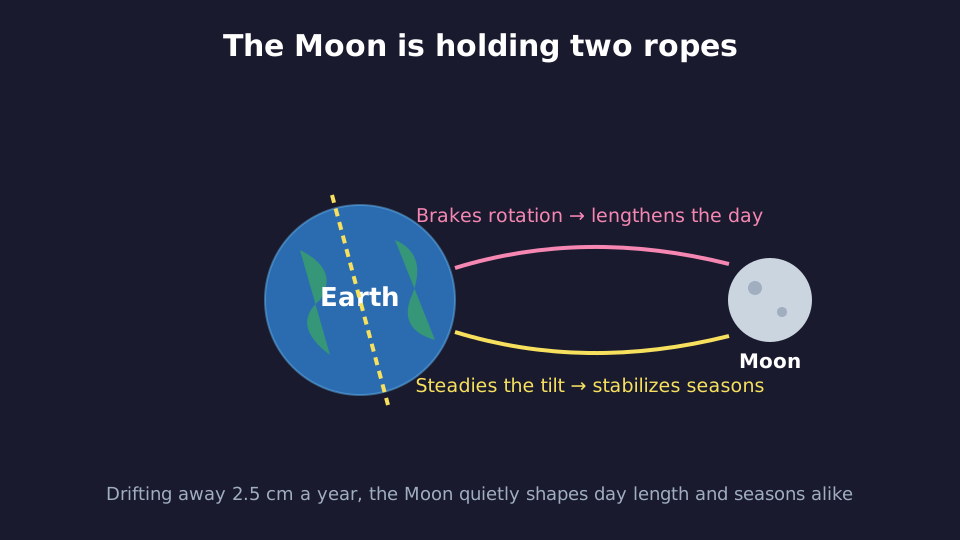
Every year, the Moon slips about 2.5 centimeters farther from Earth, and in exchange it's been quietly stretching our days longer for billions of years. It also acts as a steadying weight on Earth's tilted axis. Without it, days would stay short and seasons would swing wildly. The familiar disk in our night sky is secretly running the clock and the climate.

Black Holes Aren't Cosmic Vacuum Cleaners. Earth Would Keep Orbiting Just Fine

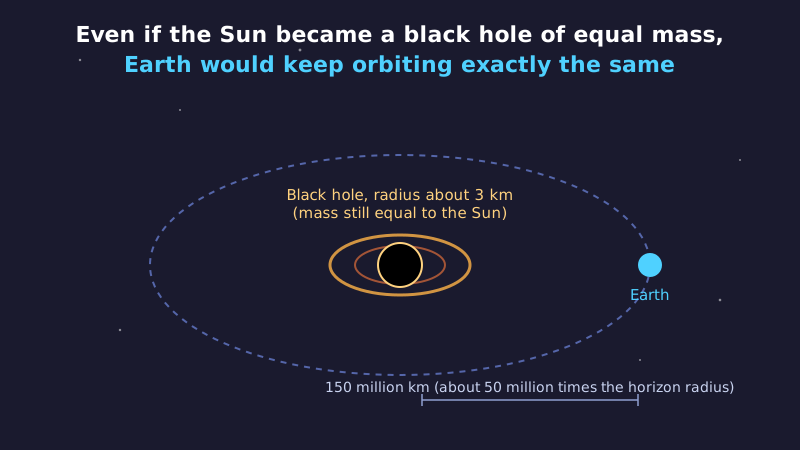
A black hole isn't a vacuum cleaner that sucks up everything nearby. Outside the event horizon, NASA notes, its gravity is identical to that of any ordinary star of the same mass. So if the Sun turned into a 3-km-radius black hole, Earth would just keep orbiting 150 million kilometers away, business as usual. You'd only get pulled in if you drifted right up to the horizon itself.

Shrink the Sun to a Ping-Pong Ball, and the Nearest Star Sits 1,100 Kilometers Away

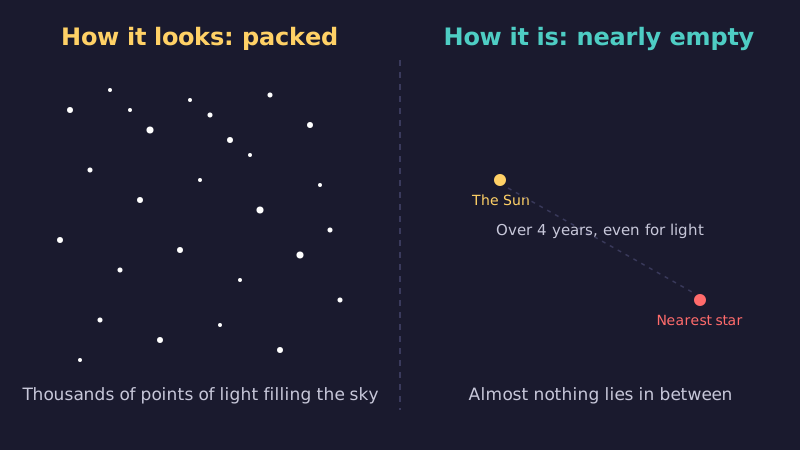
The night sky looks packed with stars. But shrink the Sun to a ping-pong ball (4 cm across), and Earth becomes a grain of sand 4.3 meters away, while the nearest star is another ping-pong ball roughly 1,100 km off. Set it down in Tokyo, and that star lands south of Kagoshima. In between: almost total vacuum. With over 100 billion stars in our galaxy, the universe is mostly made of the gaps between them.

Venus Is Earth's Twin, Yet Its Surface Melts Lead at 467°C — Blame the Runaway Greenhouse Effect

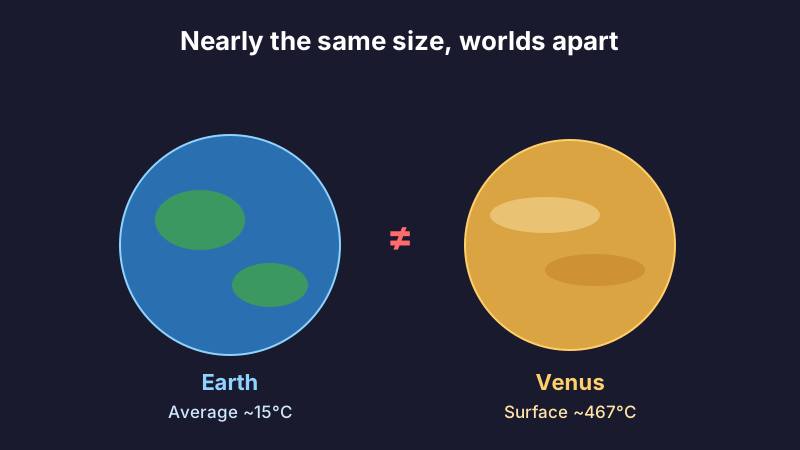
Venus is almost the same size and mass as Earth. Yet its surface sits at 467°C, hot enough to melt lead, under 93 times Earth's air pressure — like standing 900 meters deep in an ocean. The same raw materials, the same neighborhood, but a carbon dioxide atmosphere that never lets heat escape sent one twin down a very different path.

Floating Astronauts in Water for Five Days Is Reshaping Rehab for Bedridden Patients

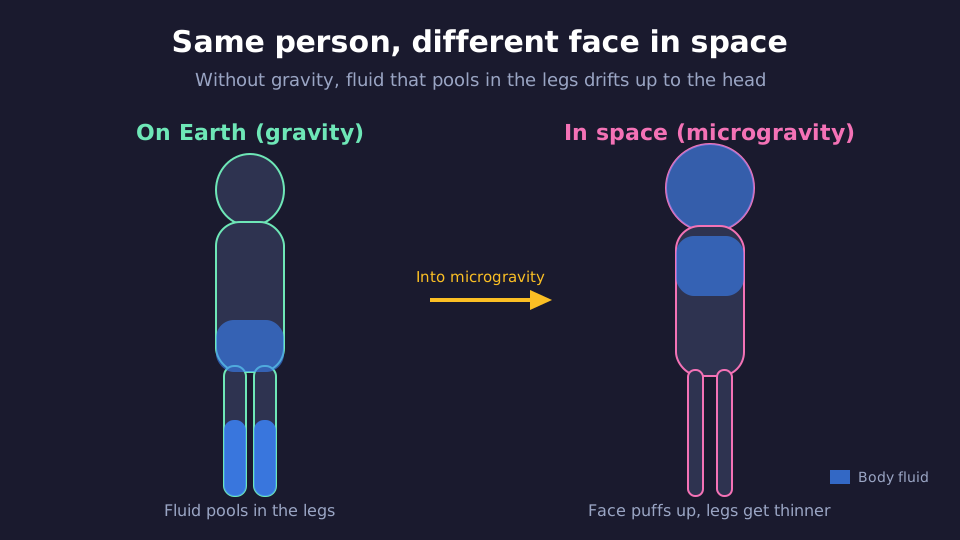
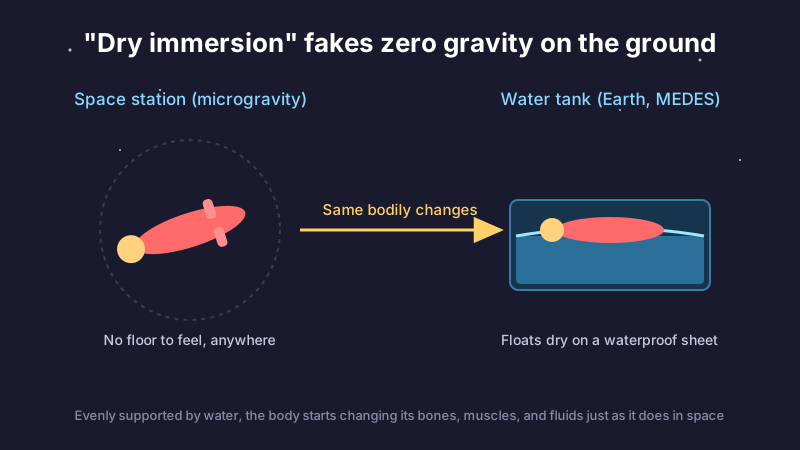
ESA floats volunteers in water covered by a waterproof sheet for days at a time, deliberately recreating how astronauts' bodies decline in orbit. Stripped of support, bones and muscles start wasting and fluid rushes to the head. The data from these tanks is becoming the blueprint for getting long-term bedridden patients back on their feet.

Caught in the Act: The First Direct Photo of a Planet Being Born in a Disk Gap

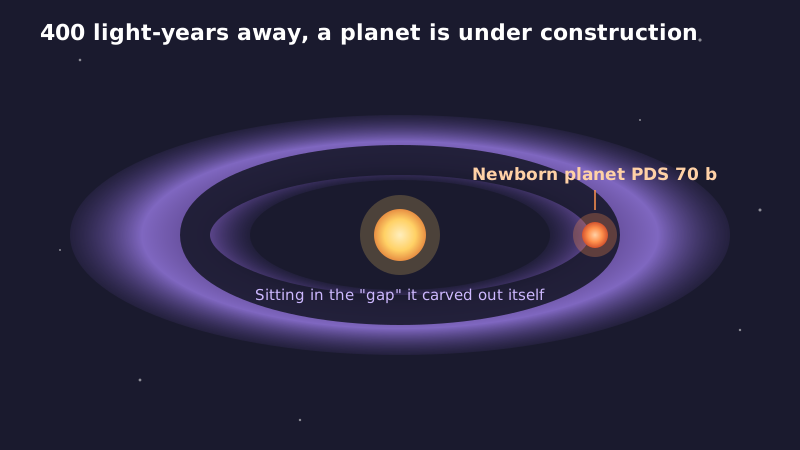
Around PDS 70, some 400 light-years away, a gas-giant planet several times Jupiter's mass is still gathering material inside a gap it carved in the star's disk. Its surface runs about 1,000°C, and it orbits roughly as far out as Uranus does from the Sun. This isn't a 'candidate' — it's the first time anyone has caught a planet mid-construction in a single clear image.

If Earth Stopped Spinning, the Oceans Would Flee to the Poles and Land Would Ring the Equator

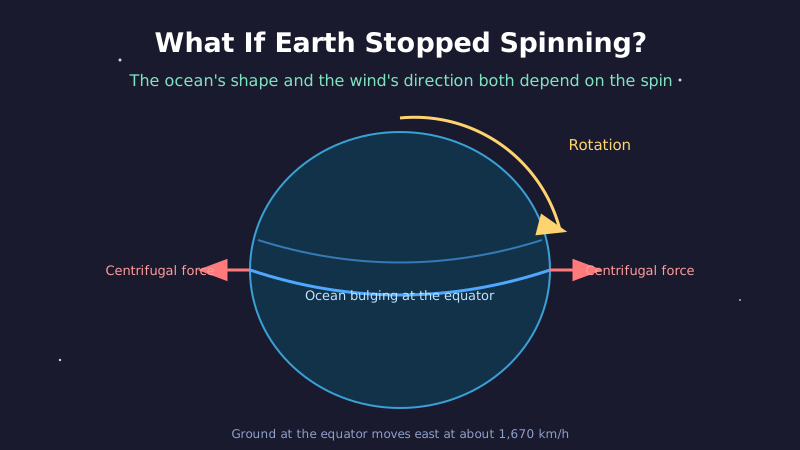
Right now, you're being carried eastward at about 1,670 km/h. That's the speed of Earth's rotation, and the centrifugal force it creates is quietly piling up ocean water at the equator. Stop the spin, and the water would drain toward the poles, leaving a continuous belt of land circling the globe. A thought experiment on how much of the sky and sea we take for granted only exists because the planet keeps turning.

A Cancer Drug Grown Weightless in Orbit Is Turning IV Drips Into a Single Shot

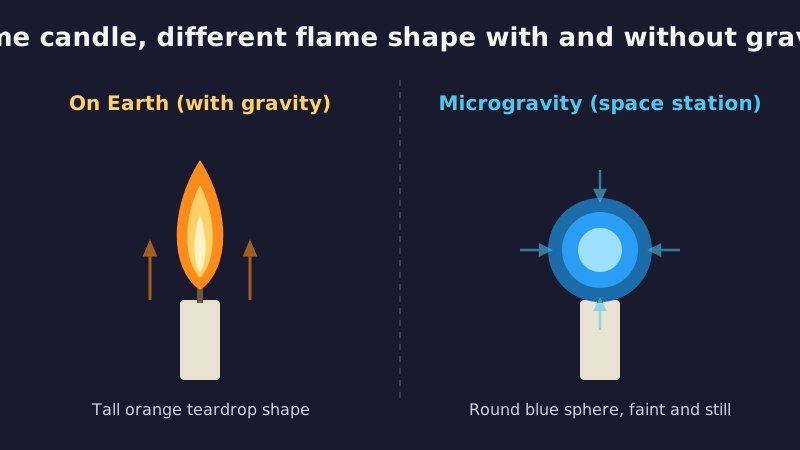
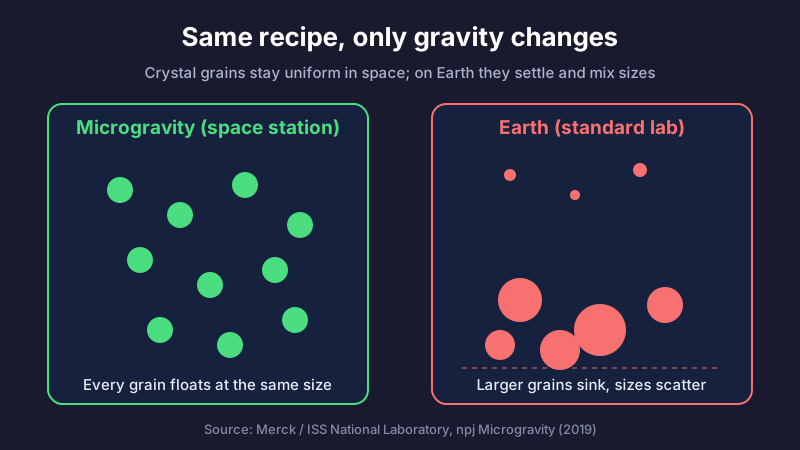
Gravity makes crystals settle unevenly, leaving a jumble of grain sizes. So Merck grew crystals of the cancer drug Keytruda aboard the International Space Station, where microgravity produced a uniform 39-micrometer grain. That quiet orbital experiment is already shaping up a shot that could replace a hospital IV drip.