Cosmic Mysteries

Black holes, dark matter, the edge of the universe—still-unsolved puzzles of the cosmos.

18 articles

Articles

Black Holes Have a Lifespan, Too — and the Smaller Ones Burn Hot and Die Fast

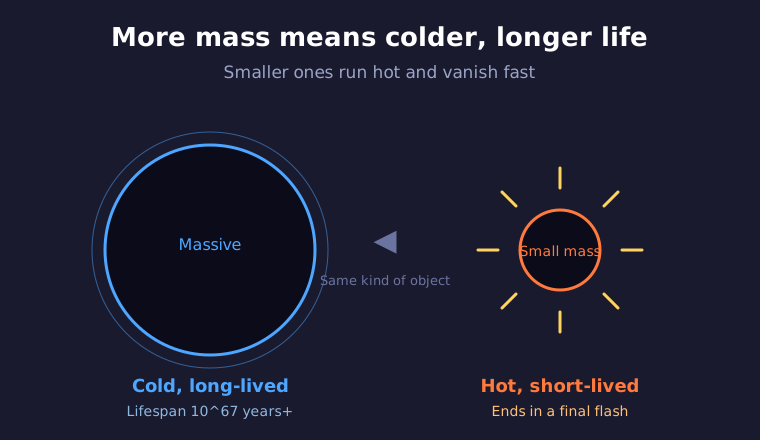
Black holes look eternal, but physics says otherwise. Add mass and they get colder and live longer; shrink them down and they run hot, violent, and brief, ending in a burst of light. Even a sun-sized black hole would take roughly 10^67 years to fully evaporate — a span that makes the universe's 13.8-billion-year history look like nothing at all.
Black Holes Aren't Cosmic Vacuum Cleaners. Earth Would Keep Orbiting Just Fine

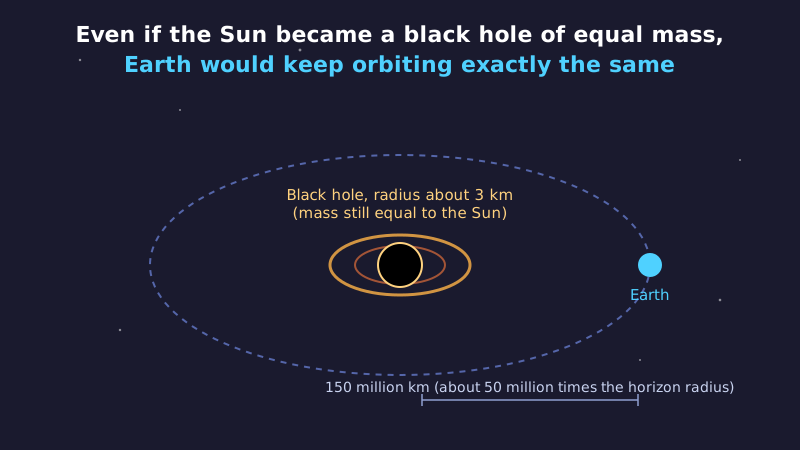
A black hole isn't a vacuum cleaner that sucks up everything nearby. Outside the event horizon, NASA notes, its gravity is identical to that of any ordinary star of the same mass. So if the Sun turned into a 3-km-radius black hole, Earth would just keep orbiting 150 million kilometers away, business as usual. You'd only get pulled in if you drifted right up to the horizon itself.