#galaxies

Content tagged "galaxies".

10 items (10 articles, 0 stories)

Articles

The Night Sky Is a Collage of the Past — We've Never Seen the Universe's 'Now'

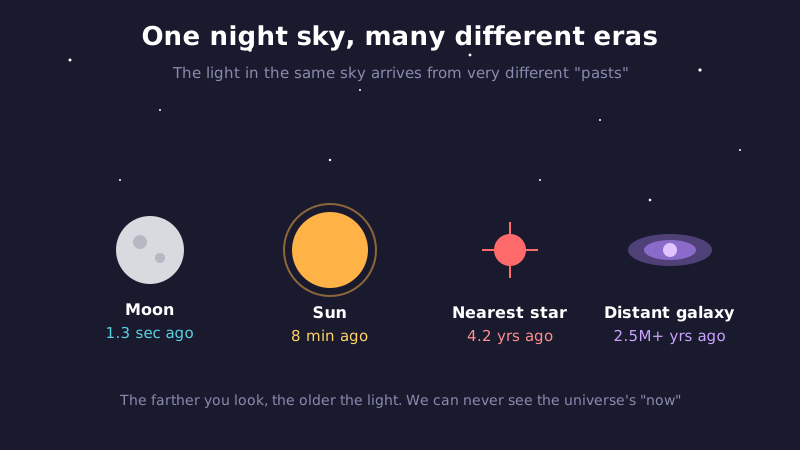
Sunlight left the Sun about eight minutes ago. Light from Proxima Centauri, our nearest star, is about 4.2 years old. The Andromeda Galaxy's light is roughly 2.5 million years old. Because light speed is finite, looking farther always means looking further back in time. SORABUMI translates this into everyday scale to explain why a single glance at the night sky holds hundreds of millions of years at once.

Galaxies Are Wrapped in a Hidden Sea of Hot Gas Far Bigger Than Their Stars

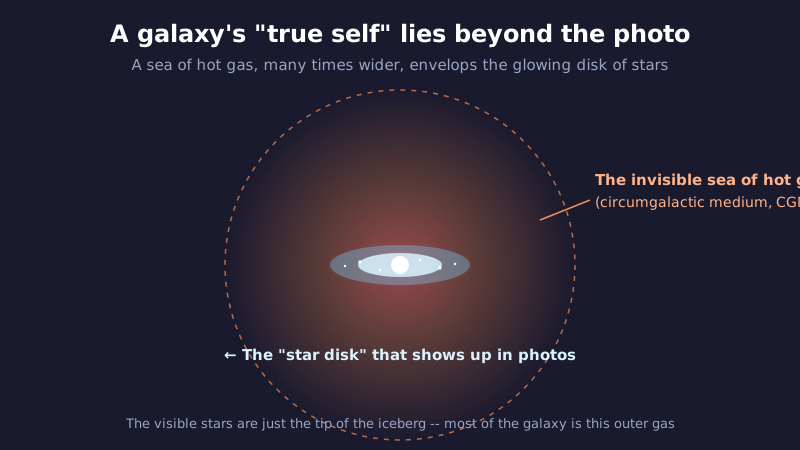
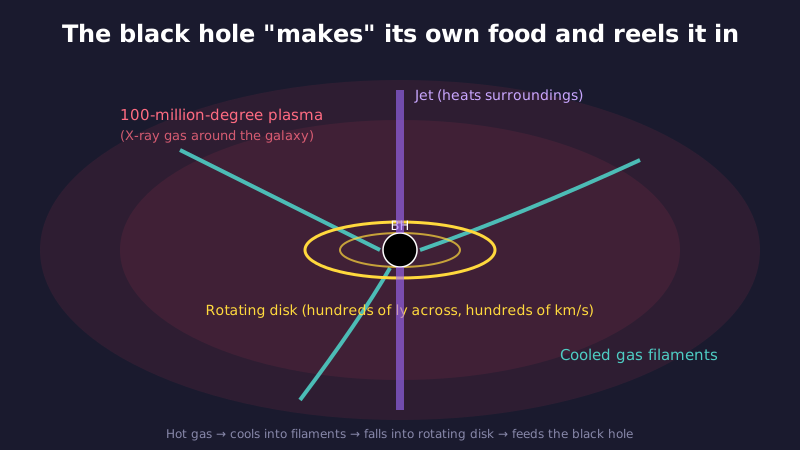
A galaxy in a photograph looks like a cluster of stars, but the real thing extends far beyond that: a diffuse cloud of gas, wider than the visible galaxy, that supplies the raw material for future stars. NASA's small satellite ASPERA is designed to catch this invisible gas in ultraviolet light, and SORABUMI explains how galaxies grow by inhaling and exhaling it.

Heavier Star Clusters Break Out of Their Gas Cocoons Faster — and Flood Galaxies with UV Light

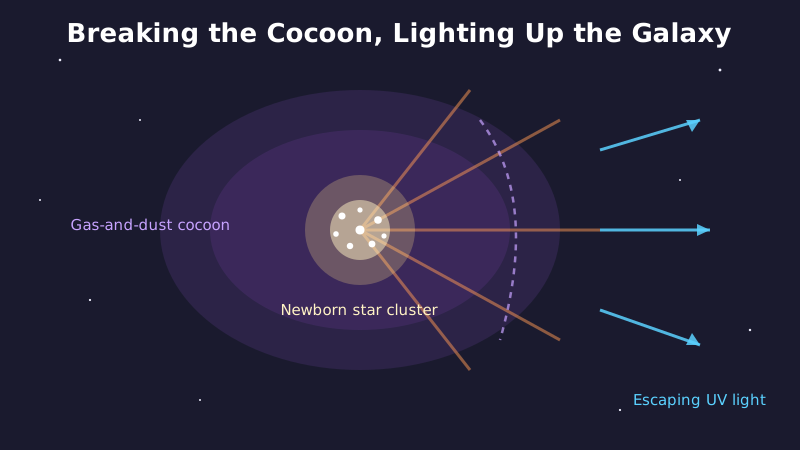
Newborn star clusters are wrapped in gas cocoons and invisible in optical light. A team led by Stockholm University combed through thousands of clusters with Hubble and JWST and found that massive clusters break free in about 5 million years, while lighter ones take 7 to 8 million — and the heavier ones are the first to light up their galaxy. SORABUMI explains.

← See all tags