Telescopes Can't See Wide and Deep at Once — Why the Sky Needs Two Kinds of Eyes
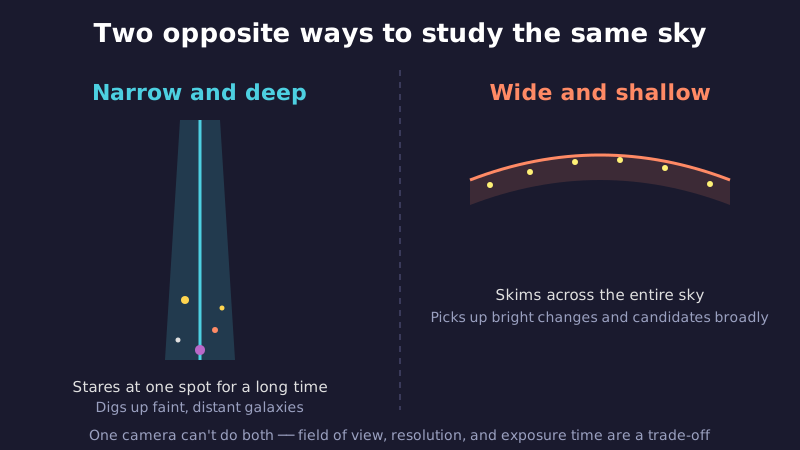
Hubble stared at a patch of darkness one-tenth the size of the full moon for eleven straight days and dug up about 10,000 galaxies. TESS, meanwhile, sweeps the entire sky in one pass. Why does studying the cosmos require such opposite telescopes? SORABUMI breaks down the trade-off between field of view, resolution, and exposure time.