Where Space Meets Everyday

From GPS to water purification—everyday technologies born from space exploration.

6 articles

Articles

Why Your Map App Isn't Off by 10 km a Day: The Clock Fix Hiding in Your Pocket

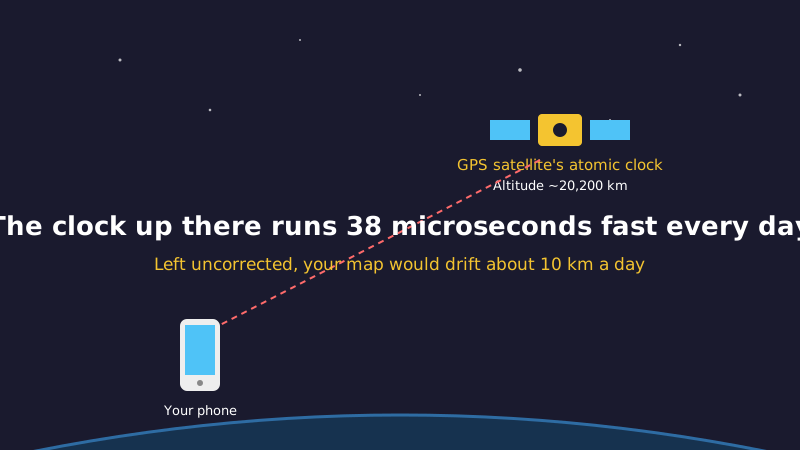
Your phone's location depends on the clocks aboard GPS satellites 20,000 km overhead. Relativity makes those clocks run 38 microseconds fast every day, enough to throw your map off by about 10 km if nobody corrected it. So engineers build the satellites to run deliberately slow before they even launch. Einstein, it turns out, helps you find your way every single morning.
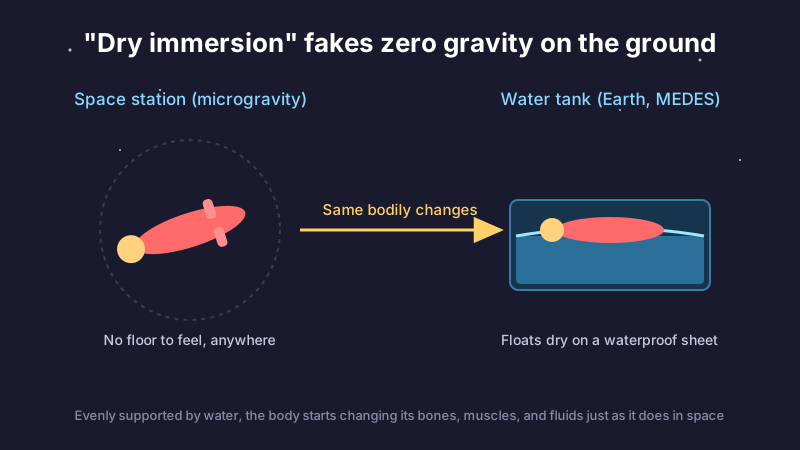
Floating Astronauts in Water for Five Days Is Reshaping Rehab for Bedridden Patients

ESA floats volunteers in water covered by a waterproof sheet for days at a time, deliberately recreating how astronauts' bodies decline in orbit. Stripped of support, bones and muscles start wasting and fluid rushes to the head. The data from these tanks is becoming the blueprint for getting long-term bedridden patients back on their feet.

The Wireless Sensor NASA Built for Astronauts Is Now Keeping Heart Patients Out of the Hospital

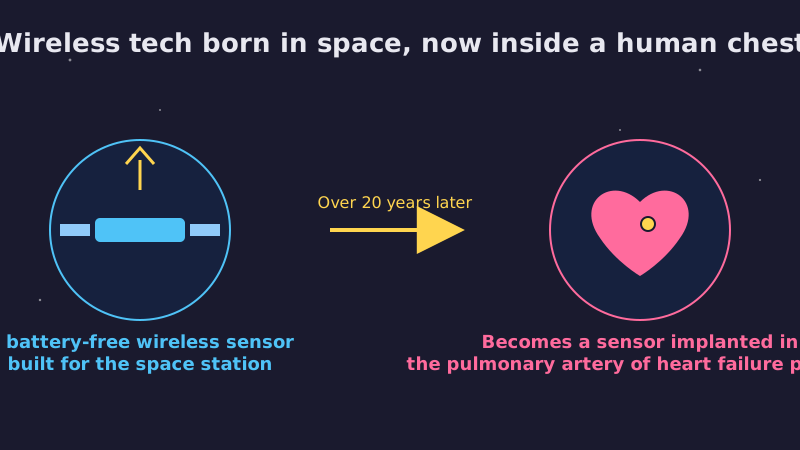
A battery-free sensor designed to monitor astronauts aboard the space station is now implanted in the pulmonary arteries of heart failure patients. One year after implantation, heart failure hospitalizations dropped 73%. A story about how an engineering constraint built for extreme environments ended up quietly at work inside the chests of people who need it most.

A 250-Gram Toy-Tech Sphere Took the First Photo of a Fallen Moon Lander

The closest photo of Japan's SLIM lander lying face-down on the Moon was taken by SORA-Q, an 80mm, 250-gram sphere built with transforming-toy technology from Takara Tomy. At roughly 1/4000th the weight of NASA's Mars rover Perseverance, why did such a small, simple design hold up so well in a brutal environment? SORABUMI explains.