All Articles (page 3)

All 193 articles, newest first

Latest articles

Neptune's Faint Rings Are Sharp Again for the First Time in 30 Years — Without Getting Closer

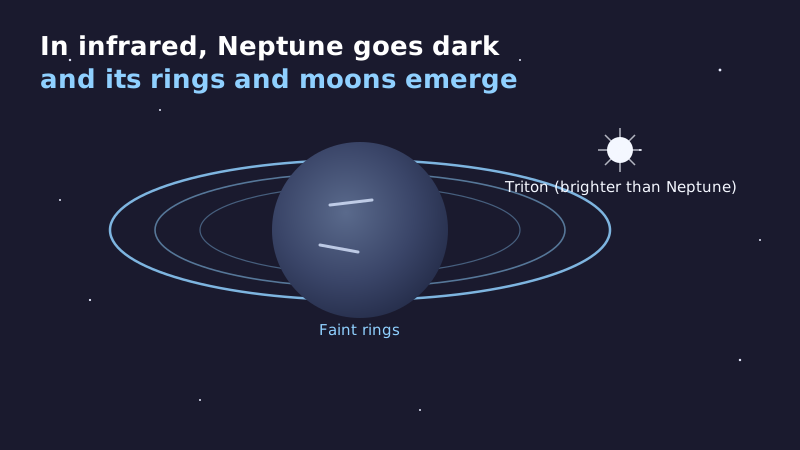
Voyager 2 caught Neptune's faint rings up close in 1989, and they've barely been visible since. Now JWST, sitting roughly 2.8 billion miles away, has spotted them again in infrared — with Neptune itself fading into the dark and its rings and seven moons popping into view. SORABUMI explains how staying farther away actually helped.

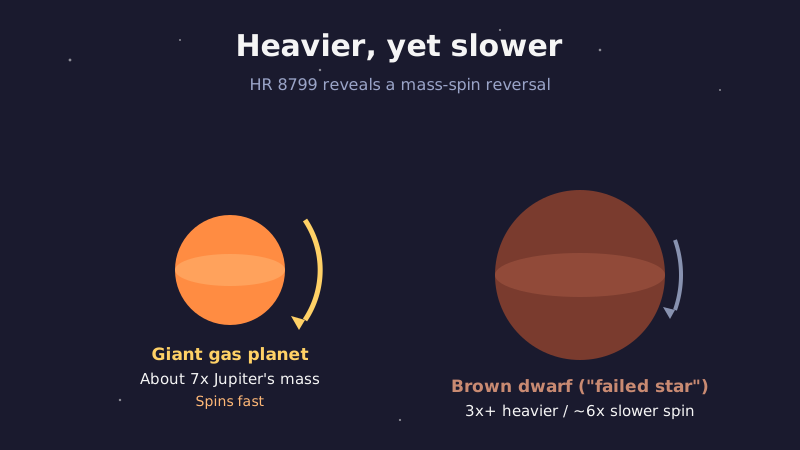
Giant Planets Spin Faster Than 'Failed Stars' — A Surprising Mass-Spin Reversal

Keck Observatory's KPIC instrument measured the spin of giant gas planets and brown dwarfs ('failed stars') using spectroscopy. In the HR 8799 system, the brown dwarf — more than three times heavier — rotates about six times slower than its lighter planetary neighbor. The likely culprit: a newborn planet's magnetic field braking against its birth disk, offering a new way to tell planets and stars apart.

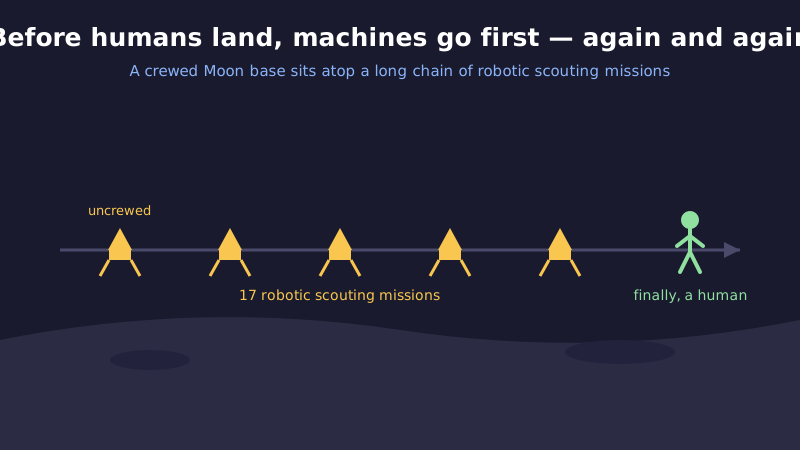
17 Robotic Missions Before a Single Astronaut: The Long Scouting Run to a Moon Base

Before humans return to the Moon, NASA is sending 17 uncrewed landers carrying more than 60 instruments — a roughly $2.6 billion reconnaissance effort. Why send machines dozens of times before people go even once? SORABUMI unpacks the long robotic run-up to a lunar base, from hunting for ice to proving landing accuracy to wiring up power and communications.

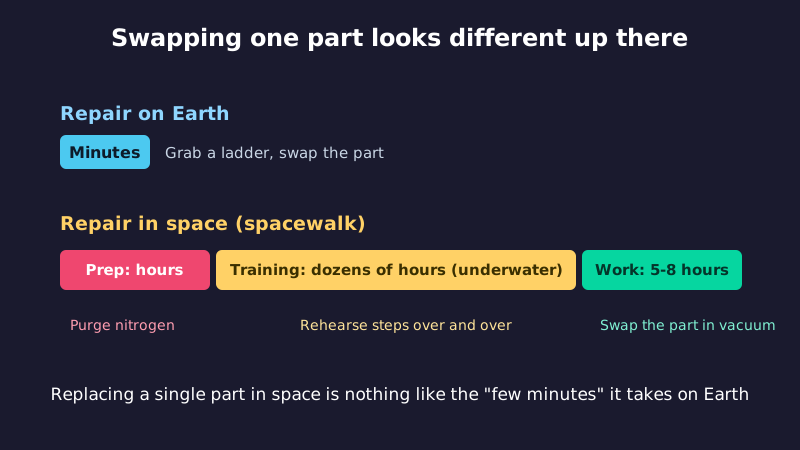
Replacing One Part in Space Starts With Purging Nitrogen From Your Blood

A spacewalk to swap out a single component on the ISS usually runs 5 to 8 hours. Before that, astronauts spend hours breathing pure oxygen to purge nitrogen from their bodies, and rack up roughly 7 hours of pool training for every hour they'll spend outside. SORABUMI walks through what 'fixing something' really means in orbit, starting from the prep work.

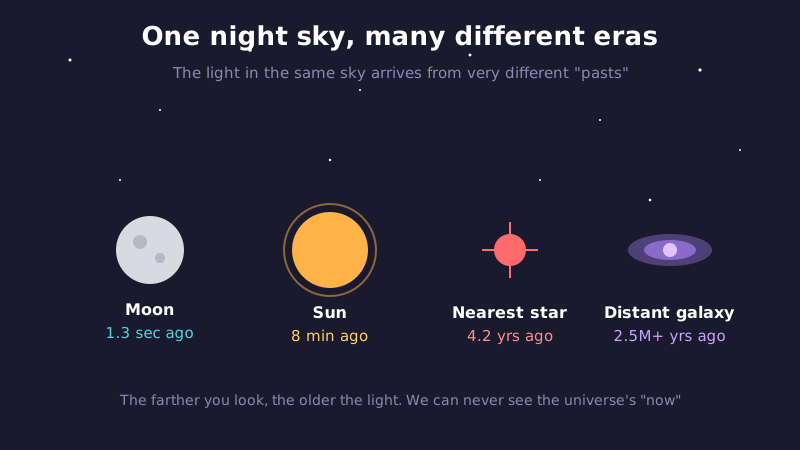
The Night Sky Is a Collage of the Past — We've Never Seen the Universe's 'Now'

Sunlight left the Sun about eight minutes ago. Light from Proxima Centauri, our nearest star, is about 4.2 years old. The Andromeda Galaxy's light is roughly 2.5 million years old. Because light speed is finite, looking farther always means looking further back in time. SORABUMI translates this into everyday scale to explain why a single glance at the night sky holds hundreds of millions of years at once.

Galaxies Are Wrapped in a Hidden Sea of Hot Gas Far Bigger Than Their Stars

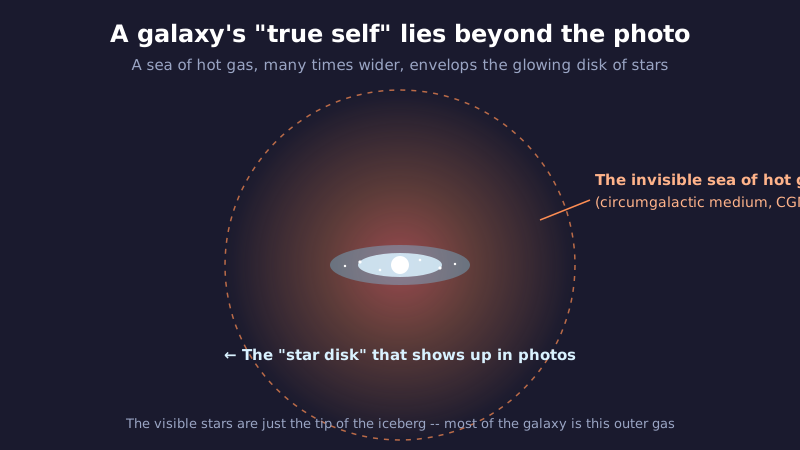
A galaxy in a photograph looks like a cluster of stars, but the real thing extends far beyond that: a diffuse cloud of gas, wider than the visible galaxy, that supplies the raw material for future stars. NASA's small satellite ASPERA is designed to catch this invisible gas in ultraviolet light, and SORABUMI explains how galaxies grow by inhaling and exhaling it.

The Sun's Surface Is a Boiling Sea of Grains — A Ground Telescope Just Mapped Its Magnetism at 30 km

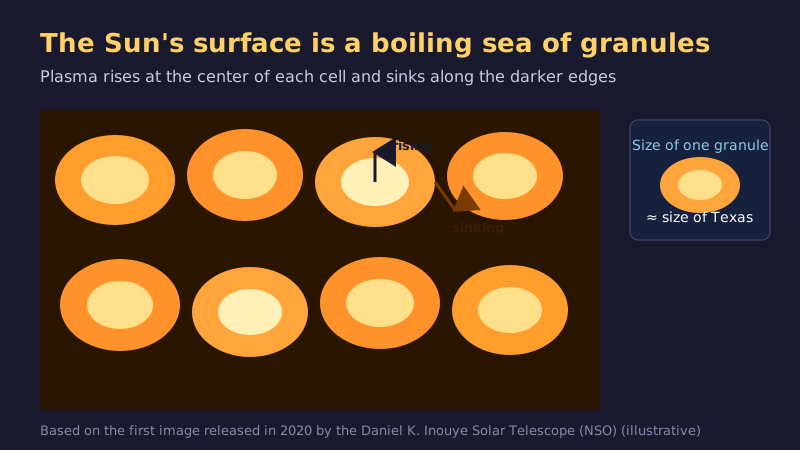
The Daniel K. Inouye Solar Telescope, the largest solar telescope on Earth, has resolved features as small as 30 km on the Sun's surface, 150 million km away. Texas-sized granules on a boiling face, magnetic threads just 20 km wide. SORABUMI explains how a ground-based instrument managed to see that clearly.

The Invisible Black Hole That Fast-Moving Stars Gave Away

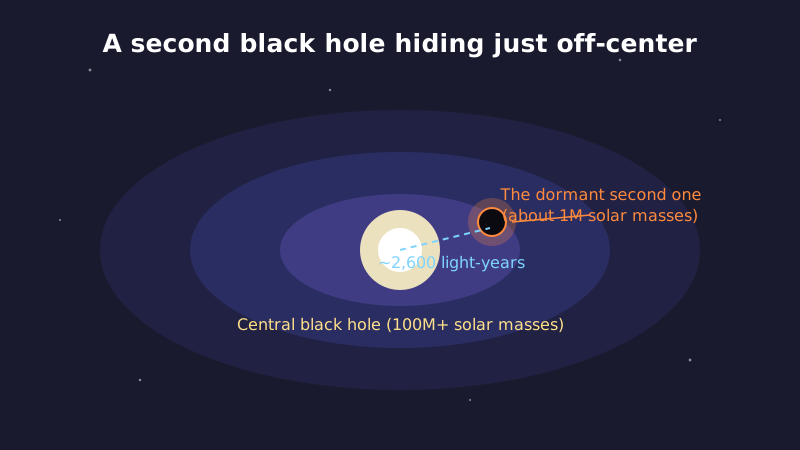
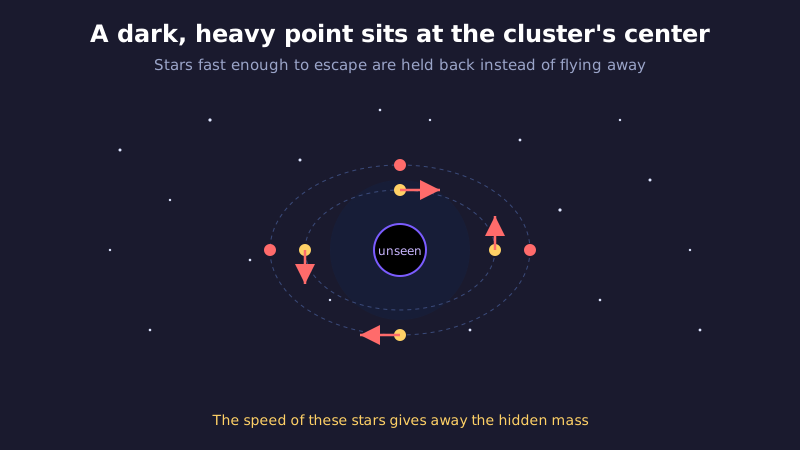
How do you find a black hole you can't see? At the center of Omega Centauri, seven stars are moving fast enough to escape the cluster — yet they never leave. That contradiction points to an intermediate-mass black hole with at least 8,200 times the Sun's mass. SORABUMI breaks down how two decades of Hubble images uncovered it.

No Brand-New Telescope Can Reshoot Jupiter's Storms From Ten Years Ago

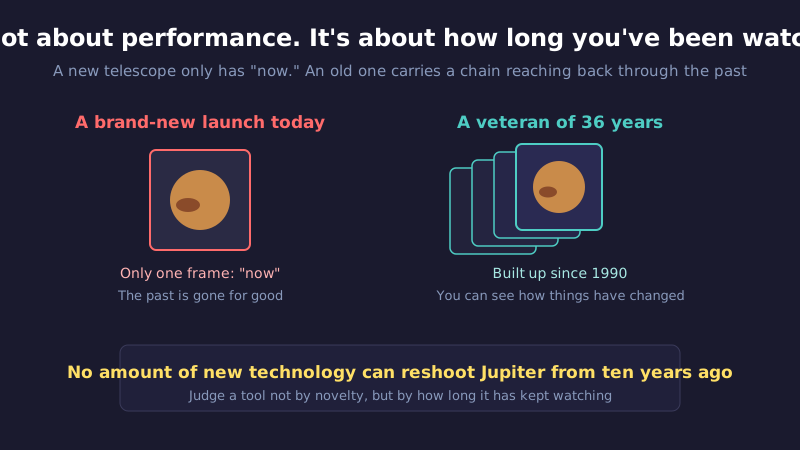
Launch the best telescope in the world today, and you still can't photograph Jupiter as it looked a decade ago. Hubble, working since 1990, caught something no new instrument ever could: the outer winds of the Great Red Spot speeding up by as much as 8% between 2009 and 2020. SORABUMI explains why a telescope's worth isn't measured by how new it is, but by how long it has been watching.

Heavier Star Clusters Break Out of Their Gas Cocoons Faster — and Flood Galaxies with UV Light

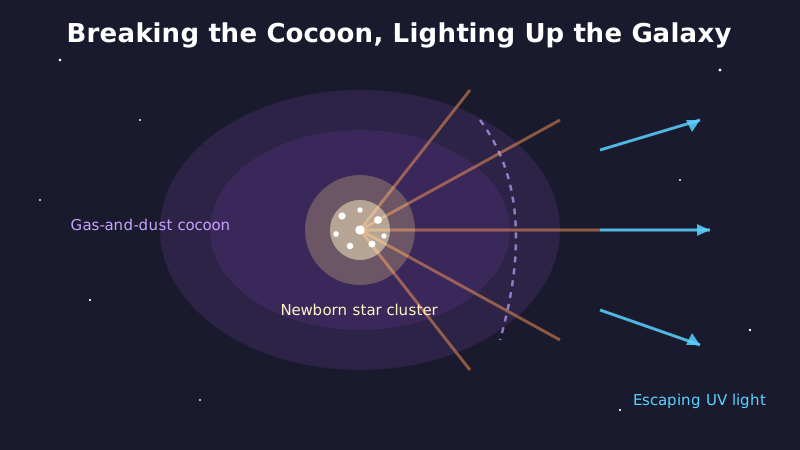
Newborn star clusters are wrapped in gas cocoons and invisible in optical light. A team led by Stockholm University combed through thousands of clusters with Hubble and JWST and found that massive clusters break free in about 5 million years, while lighter ones take 7 to 8 million — and the heavier ones are the first to light up their galaxy. SORABUMI explains.

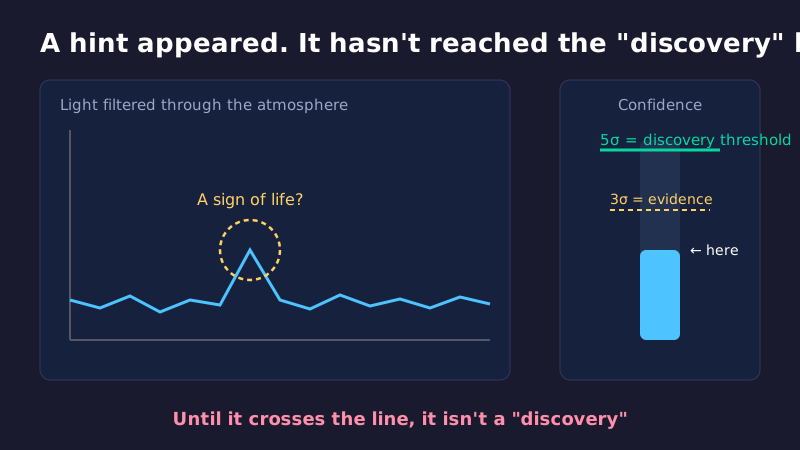
Why a Hint of Life Isn't a Discovery Until the Odds of a Fluke Drop Below 1 in 3.5 Million

When a possible sign of life turns up in an exoplanet's atmosphere, scientists don't celebrate right away. Until the chance of a fluke falls below roughly 1 in 3.5 million — the '5-sigma' threshold — and until they've finished doubting their own wishful thinking, it isn't a 'discovery' yet. SORABUMI explains the yardstick of scientific confidence and why researchers hold their excitement in check.