In just ten hours of test observations, 2,104 previously unknown asteroids turned up. Seven of them were on orbits that bring them close to Earth.
That happened in June 2025, when Rubin Observatory released its first-light images. The sheer number of discoveries made headlines — but the really astonishing part comes next. If a ten-hour dataset yields that many finds, what happens when you point the same telescope at the southern sky every single night for ten years?
Do the arithmetic and the answer becomes dizzying. We’re talking numbers large enough to rewrite the basic rules of astronomy.
A Camera That Fits the Whole Sky in One Shot
Rubin’s camera is the largest astronomical camera ever built. It weighs about 2.8 metric tons and captures 3.2 gigapixels per image — enough to fit 45 full moons side by side in a single frame.
Most major telescopes face a hard trade-off: go wide and you lose resolution; sharpen up and you lose sky coverage. Rubin breaks that constraint by pairing an 8.4-meter primary mirror with a custom-designed optical system. The result is a telescope that is both wide and fast — a combination astronomers have chased for decades.
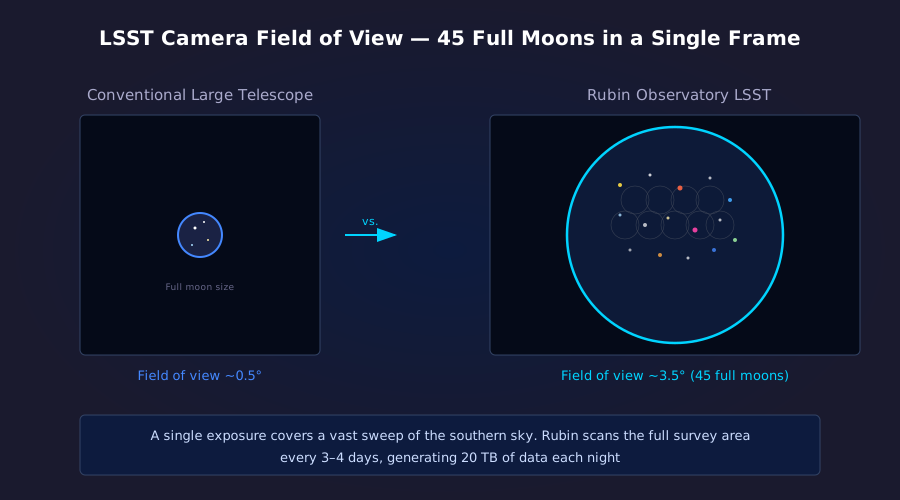
The observatory sits atop Cerro Pachón in northern Chile, at 2,682 meters above sea level. The Andes offer some of the best observing conditions on Earth: long stretches of clear nights and unusually stable air. From that vantage point, Rubin covers the entire southern sky — roughly 18,000 square degrees.
The key advantage over older wide-field telescopes is cadence. Rubin can return to the same patch of sky every three to four days. That rhythm of repetition is its sharpest weapon.
The Universe Is Moving — Finding Change Through Subtraction
Classical astronomy was basically cartography. You mapped what was there: the distribution of galaxies, the shape of constellations, the orbits of planets. Everything was, in essence, a still image.
Rubin’s approach is the opposite. It asks, automatically, every night: what changed since yesterday?
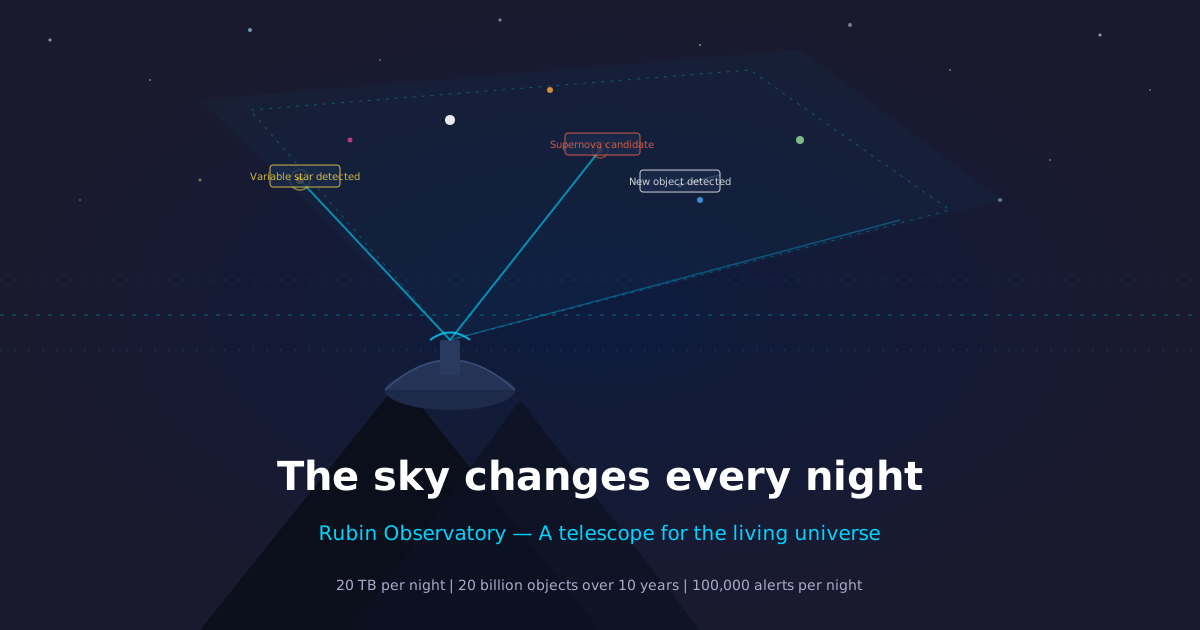
Here’s how it works. A field is photographed, then photographed again three days later. A computer stacks the two images and subtracts everything that hasn’t moved or changed brightness. Whatever remains — that’s what changed.
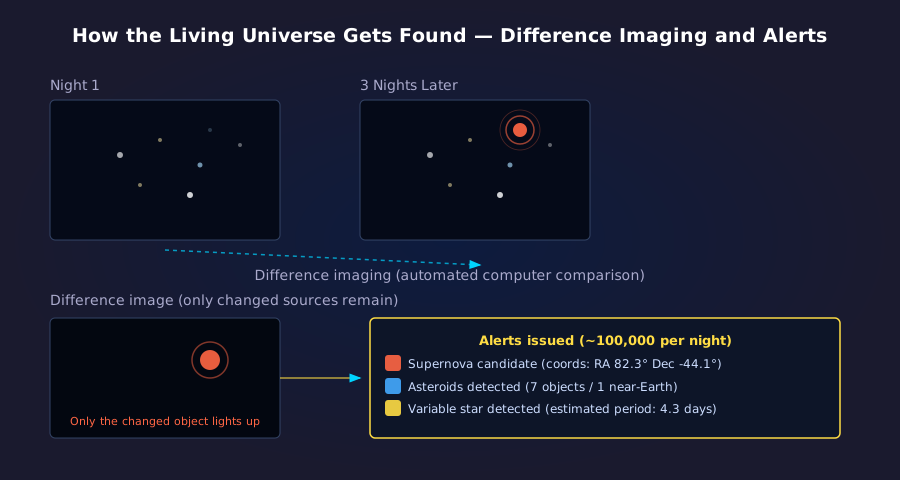
This difference imaging process generates roughly 100,000 “change alerts” per night. Supernovae — the moments when massive stars explode. Variable stars that pulse in brightness on regular schedules. Asteroids drifting closer to Earth. And tidal disruption events, where a black hole tears apart a nearby star in a brief, violent flare.
These are all objects that light up for a while and then go dark. The only reason they kept slipping through the cracks before was simple: either no telescope happened to be looking in that direction at the right moment, or the next time someone checked, the event was already over. Rubin is the first telescope designed so that nothing gets missed.
The processing speed is equally striking. Within 60 seconds of detecting a change, automated alerts go out to observatories and amateur astronomers worldwide. A supernova detected in Chile can have a telescope on the other side of the planet trained on it within a minute. The old process — someone spots something unusual, files a report, other observatories confirm it — could eat up days.
Rubin’s data will also be open to the world by default. Professional researchers, graduate students, and amateur astronomers all get access to the same raw images. The next big discovery might come from a research group at a major university, or from someone scrolling through images on a laptop at home.
What Changes Over Ten Years
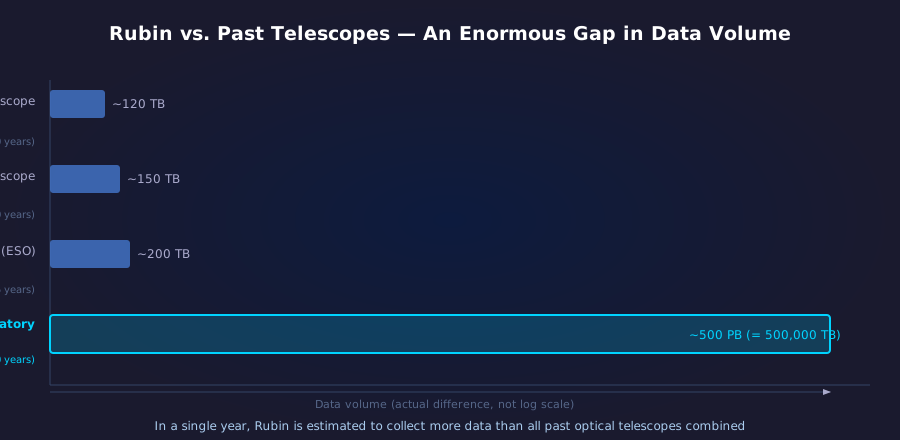
Twenty terabytes per night. Around 500 petabytes over the decade. One petabyte is a thousand terabytes, so 500 petabytes is a genuinely staggering figure.
For context: the Hubble Space Telescope accumulated about 120 terabytes of data over more than 30 years. Rubin will surpass Hubble’s entire lifetime archive within its first year of operation.
All of that data feeds into four main scientific themes.
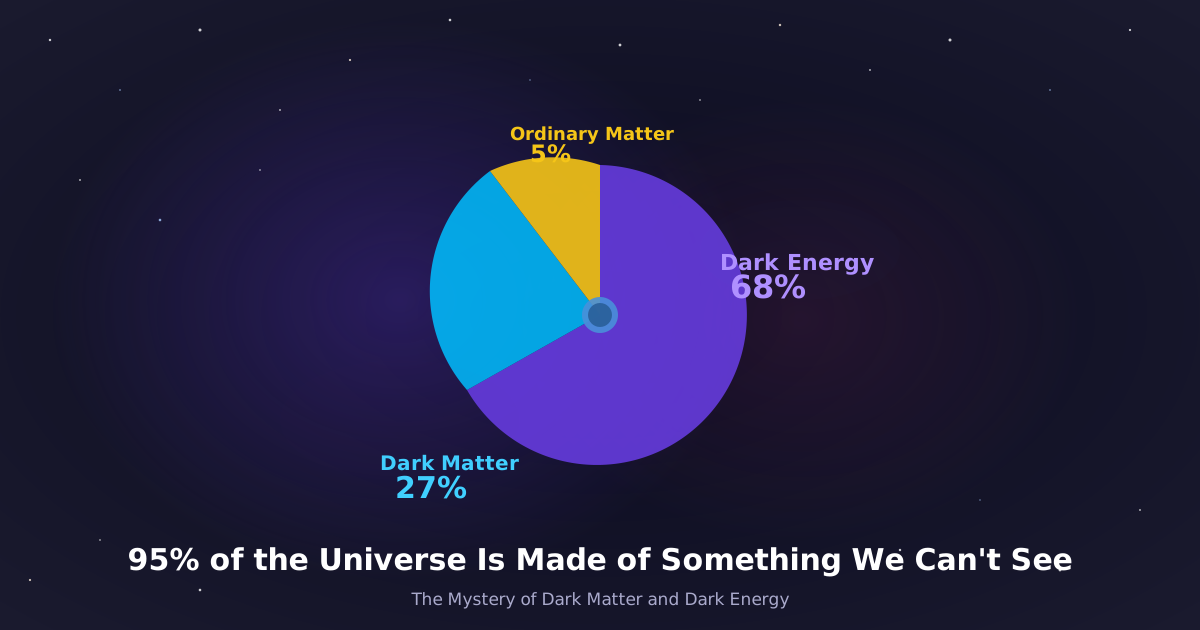
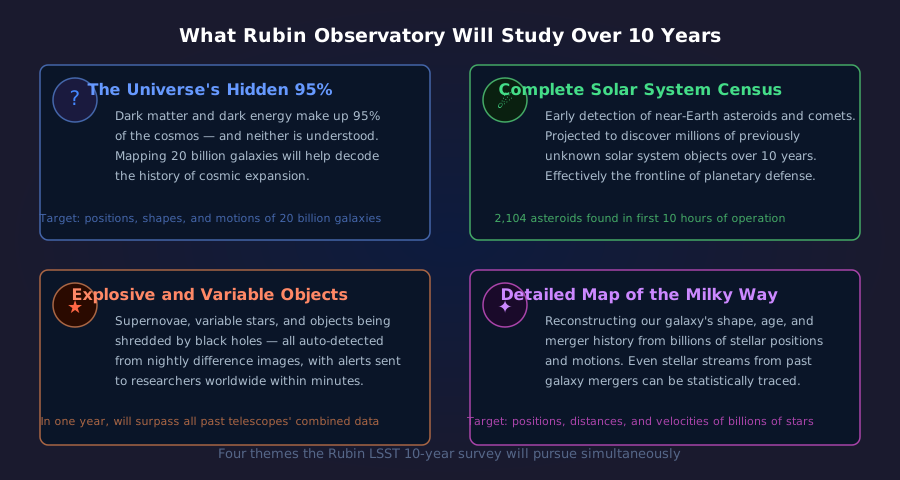
1. The history of cosmic expansion By precisely measuring the positions, shapes, and distances of 20 billion galaxies, Rubin can work backward to reconstruct how the universe has expanded over time. That gives astronomers indirect leverage on dark matter and dark energy — the two invisible ingredients that account for about 95 percent of everything, and neither of which is understood.
2. A complete census of the solar system Right now, scientists have catalogued only a fraction of the near-Earth asteroids out there. Over ten years, Rubin is expected to discover several million previously unknown solar system objects. From a planetary defense standpoint, it becomes humanity’s most important early-warning radar.
3. Explosions and variable objects Detailed light curves — the rise and fall of brightness over time — from huge numbers of supernovae will sharpen the cosmic distance scale. And there’s a good chance Rubin will catch new types of explosive transients that don’t yet have names.
4. A detailed map of the Milky Way Recording the positions and velocities of billions of individual stars lets astronomers piece together how our galaxy formed. Because we live inside the Milky Way, we can’t photograph it from the outside. But Rubin’s repeated observations add the dimension of time: how stars move. That motion data, built up over a decade, comes close to giving us a three-dimensional view from the outside.
A Universe That Was Always Happening Without Us
What strikes me most about Rubin is the nature of the problem it’s solving.
The real limitation of traditional astronomy wasn’t that we could only look where we chose to look. It was that we could never know what happened while no one was watching. Supernovae fade within weeks. Asteroids approach on their own schedules. A black hole shredding a star is a one-time event. Once it’s over, it’s over.
Rubin changes that. For the first time, “what happened in the universe while we weren’t looking” becomes a question with an answer.
The June 2025 first-light images captured hundreds of millions of galaxies and countless Milky Way stars — along with 46 variable objects. And that was just ten hours of data. Honestly, I can’t wait to see what the next ten years of full operation turns up.
Takeaway
The heart of Rubin Observatory isn’t its size or its depth — it’s the repetition. The same sky, every night, with the differences pulled out automatically. The numbers stack up fast: in a single year, Rubin is projected to collect more data than every previous optical telescope in history, combined.
Variable stars and supernovae have been found before. But tracking them systematically, all-sky, in real time — that’s new. Moments in the universe that used to disappear unrecorded will finally leave a trace.
Ten years from now, when Rubin’s completed dataset is in hand, I suspect we’ll look back and think: what we called astronomy before was just a handful of still photographs. The universe was always moving. We just weren’t watching.