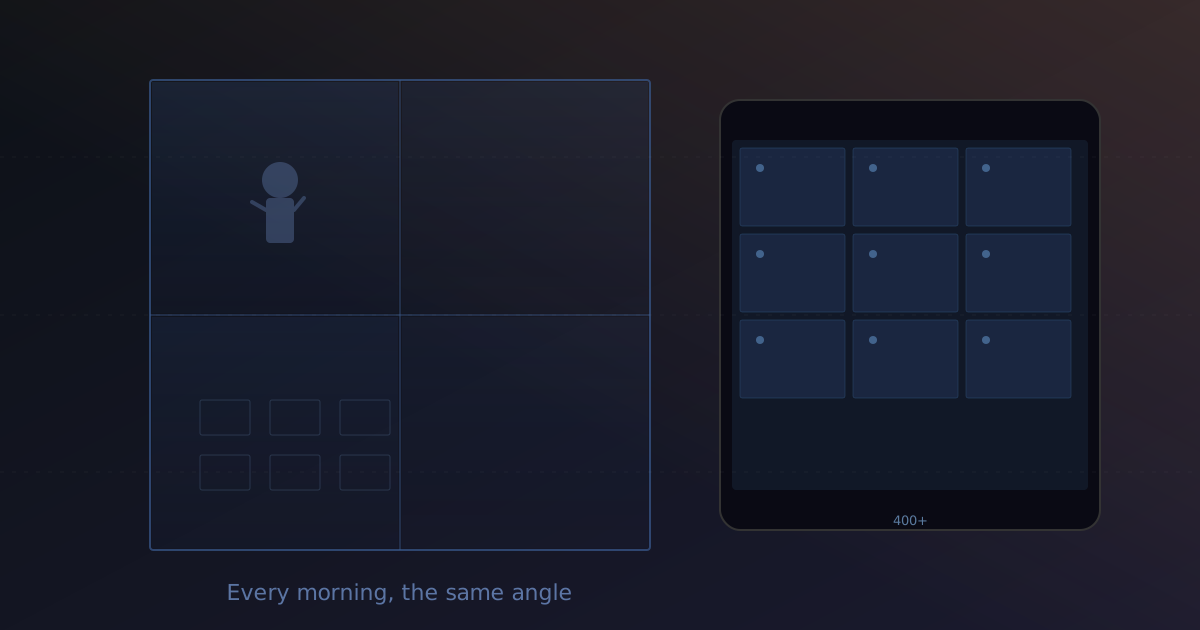
Every morning at 8:05, the art teacher photographs the classroom.
Ms. Kurata walks straight to homeroom when she arrives, positions herself at the back by the windows, and points her phone toward the lectern. No flash. No words. Three seconds. She’s been doing it since the day after the opening ceremony — nearly two years now — and her photo folder apparently holds over four hundred shots of the same room.
At first, the students thought it was creepy.
But Ms. Kurata had a gift. She could lay the morning’s photo next to yesterday’s and call out every change. The board eraser had shifted. One broom was missing from the supply closet. The water in the flower vase was lower. The chair in the third window row had been adjusted up a notch.
“Anyone could see it if they looked,” she always said. But she was catching things you still couldn’t see even after looking. Last month she spotted that Goto’s pencil case by the window was different from the day before, and fished the real one out of the lost-and-found before second period.
Before long, Class 2 had a name for it: the Kurata Camera. Lost something? Ask Ms. Kurata first. Something weird happen in the room? Check her photos. Half joke, half dead serious.
“Hey, Ms. Kurata — how come you always shoot from the window side?”
One morning, Nakamura asked. Asking the obvious question straight out was both Nakamura’s best quality and his most exhausting one.
“The light’s better over here. The morning sun comes in at an angle, see.”
She answered fast. It was true — Class 2 faced east, and shooting from the window let the morning light cut diagonally across the room. Compositionally, it made sense.
Nakamura left it there.
The break came during culture festival prep. Ms. Kurata asked to use the classroom photos for a display panel, and Nakamura volunteered to collect the files. The folder she sent over had more than four hundred shots.
Every one of them: same angle, window side, toward the lectern.
On a whim, Nakamura zoomed in on one.
The classroom looked normal. But the window glass held a reflection of the schoolyard — students in gym clothes doing warm-ups, and Miyamoto-sensei from the next class, tracksuit on, whistle to his lips.
Another photo. Miyamoto-sensei.
Another. Miyamoto-sensei.
All four hundred. Every single one. Miyamoto-sensei in the reflection.
Nakamura closed the folder. For the display panel, he cropped each photo to the front of the room only, cutting out the windows entirely.
The following week, when seats were reassigned, Nakamura said, “Can I get a window seat?” Ms. Kurata’s eyes went wide for just a moment. She sat him on the hallway side.
The month after that, Ms. Kurata’s shooting angle shifted slightly — just enough to keep the window reflections out of frame. None of the students noticed. Only the lost-and-found rate dropped to half of what it had been.
Class 2 still calls it the Kurata Camera. These days, though, they say she’s lost a little of her edge.