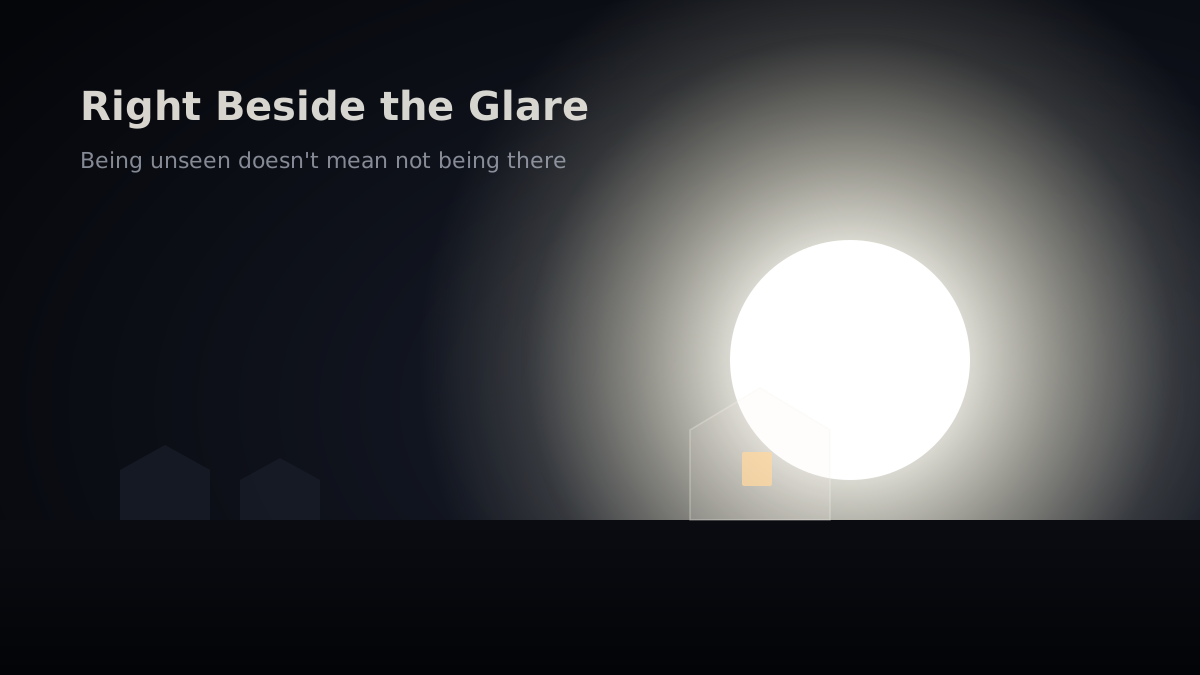
No matter how hard I looked, I couldn’t find Grandma’s house. Where it should have stood, there was only a wall of blinding white.
That summer, my parents sent me alone to stay with Grandma on the western edge of town. I got off the bus and followed Mom’s hand-drawn map on foot. When I reached the edge of town, everything in front of me went white. It was the Big Glow’s fault.
In this town, a great light burns constantly in the western sky. It’s so white that looking straight at it brings tears to your eyes. Everyone treats it like a point of pride, gazing at it dreamily morning, noon, and evening.
For what it’s worth, on the town map, the spot where Grandma’s house stood was just a blank white patch — officially, it counted as vacant land.
“There’s nothing over there.”
A kid about my age, passing by, said it like he couldn’t be bothered. “Just the Big Glow. No house or anything.”
That got under my skin. This was the house where my mother was born. But no matter how hard I squinted, all I saw was white light. Was it really that normal for something to just be invisible?
As the day wore on, the Big Glow dropped behind the western ridge, all at once. The glare pulled back instantly.
And there it was — a small house, standing alone where nothing had been a moment ago. Walls, door, even the roof, all painted a white as bright as the light itself. Until just now, it had simply dissolved into the glare, unseen.
“Ah. Dusk hour.”
The door opened and Grandma stepped out. “Good, you made it. While the Big Glow’s burning, you can’t see this place at all. Nothing to do but wait for it to go down.”
That evening, three old folks came and sat on the bench outside, eating Grandma’s simmered vegetables. Rei, who ran the tofu shop, always took the same seat at the end. Everyone just showed up out of nowhere once dusk hour arrived. As long as the Big Glow was burning, nobody came around at all.
“Grandma, you painted this place way too white,” I said. “If you used a brighter color, people could see it even during the day.”
Grandma laughed, like she found something funny about that.
“And what good would being noticed do me?”
According to her, though, invisible was exactly how she liked it. After Grandpa died, it seemed like the whole town came by every single day, peering in and murmuring “poor thing, poor thing,” until she’d had more than enough of it. So one year, she painted the house pure white. It melted straight into the Big Glow’s own white. And nobody came around anymore.
“What a relief that was,” Grandma said, laughing.
Still, I wasn’t satisfied. If a friend asked where I was staying, I couldn’t exactly say “vacant land.”
So one blindingly bright afternoon, I secretly painted the door red. Bright, solid red.
It worked. There in the middle of all that white light, the red door stood out sharp as a stain. People showed up almost right away. A family of sightseers snapped photos, saying, “There’s a house here!” Even old folks I’d never met came to peer in again, murmuring, “Poor Toki, poor thing.”
Grandma sat on the bench and sighed.
At the next dusk hour, Grandma silently brought out a can of white paint. Without a word, she painted right over the red door I’d done, covering it in white again. Come morning, once the Big Glow started burning, the red stain melted into the light and vanished.
The family that had been taking photos looked around, confused. “Huh — where’d the house go?” After staring at the white light for a while, they all shuffled off, back toward the Big Glow.
Eventually, dusk hour came again. The all-white house reappeared on the road, right where it had always stood. Rei walked straight up to the door without hesitation, said, “I’m home,” and let himself in.