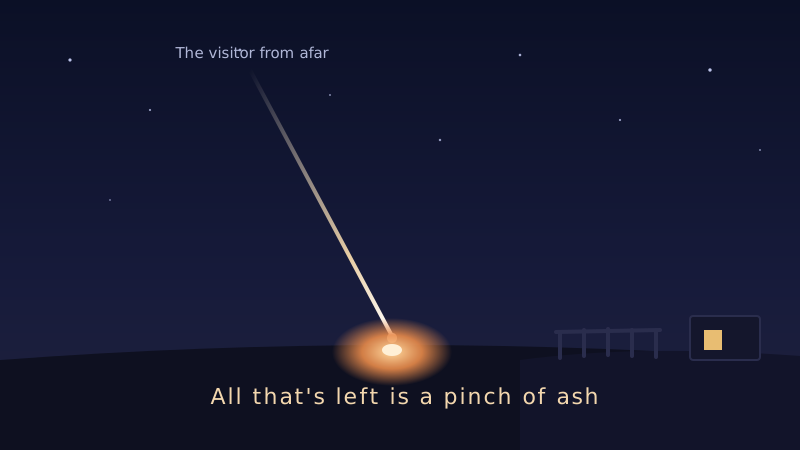
Every so often, a visitor falls into town from somewhere far away.
It scratches one clean line across the night sky, then lands with a soft plop in the yard. That’s the whole story. By the time it arrives, the visitor is already gone — nowhere to be found. All that’s left behind is a pinch of warm ash.
Grandma Tome pinches up the ash between two fingers and takes a sniff. Just like that, she names the sky the child came from. “This one’s from the far east, the sky of blue winds.” Her naming has never once been wrong — though to be fair, nobody has ever been in a position to say otherwise.
Her grandson Haru couldn’t stand it. Acting like you know everything from a pinch of ash, he thought. The real answer ought to come from the visitor’s own mouth. So all that summer, Haru had been trying to catch one. Just once, he wanted to cup a falling child gently in his hands and ask, straight out: “Where are you from?”
Haru’s trap was, frankly, elaborate. He strung an old futon across the laundry pole, set a bucket of water underneath, and even hung a lantern by the pillow end to lure the visitors in.
“A thing like that won’t do it,” Grandma laughed.
“Why not?”
“The ones from far away burn up before they get here. That’s why they turn to ash. Only the ones from real far leave anything behind at all.” She glanced, just for a second, at the little sealed tin in the back of the shelf. “A close one, now — that would land whole. Trouble is, it wouldn’t have any scent. You couldn’t tell where it came from.”
Haru felt, somehow, like he’d been brushed off again. Probably nobody, in the whole history of the town, had ever seen a far visitor’s face.
Now that he thought of it, something always ended when a visitor fell. The year the well-song stopped, the night the big lamp went dark — both times, a visitor had come first. It seemed to snuff out whatever was brightest, one thing at a time. Though there was no way to be sure. Ash is all that’s ever left after something goes out.
All summer long, Haru caught visitor after visitor. Every time he thought he’d caught one, there’d be nothing on the futon but a pinch of ash. Grandma would read it and give it a name — the northern sky, the far west — and that would be that.
At the end of August, Haru built his softest trap yet. Three futons stacked one on the other, and on top of those, every towel in the house.
That night, the visitor that fell — didn’t turn to ash.
On top of the pile of towels, a small child stirred and sat up, rubbing sleep from its eyes. It was really there. Haru held his breath and finally said the words he’d been rehearsing all summer.
“Where are you from?”
The child rubbed its eyes, yawned, and pointed past the fence.
”…The hill next door.”
Haru stood there with his mouth open for a while.
Grandma leaned in and took a sniff of the child. Then, for once, she didn’t bother naming anything.
“A close one. Nothing to read here.”
The child from the hill next door toddled off over the fence and went home — walking, on its own two feet. It didn’t take a single thing with it when it left.
That night, Haru folded up his trap. Then, sitting beside Grandma, he was shown the sealed tin for the first time. Inside was a pinch of very old ash. The ash of the farthest visitor of all, she said. Nobody, as far as anyone knew, had ever met one face to face.
Haru borrowed the hem of Grandma’s cloth. On it, he wrote down the name of the farthest sky there was.