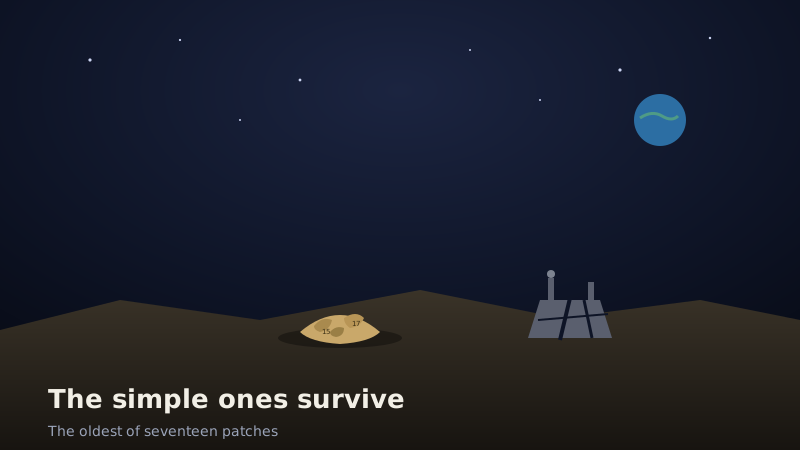
Peta was a sorry-looking machine, frankly. If you wanted the plain version: it was basically a sheet of cloth.
It worked the northern valley of the Moon, measuring rocks, scooping up dust. No skeleton, no wheels — just one thin membrane that crawled along the ground like it was being dragged. It couldn’t even stand up. When the wind blew, it flapped. Not that there’s any wind on the Moon, mind you.
The valley, it turned out, was brutal on machinery. The temperature swing between day and night was vicious. Bake in the sunlight, freeze in the shadow. Rigid machines tended to crack the moment morning hit — a snap along the seams, and that was that.
So the design team kept sending up smarter units, year after year. By now the model numbers had climbed all the way to KU-9: six legs, route-planning on its own, soil analysis, full reporting — a genuinely impressive machine. Worth noting, the design team had never once set foot in this valley themselves.
Peta didn’t have a model number. It was a rush job from ten years back, a bare-bones prototype that should have been scrapped ages ago. And yet here it still was, crawling along.
The reason was almost embarrassingly simple: Peta couldn’t crack. No skeleton meant no seams to crack along. Bake it, freeze it — it just crumpled and unfurled again. It could slide into gaps between rocks that no rigid machine could ever cross. In short, it was a machine whose only virtue was durability, and nothing else.
It tore easily, though.
Whenever it tore, Shinagawa — the field technician — patched it with a fresh scrap of material. On every patch, he wrote a number in marker, in sequence. Peta’s body now carried seventeen of them.
Peta was, in some small way, probably proud of that. Every time a new number went on, Shinagawa’s palm would pass over its body. Peta didn’t seem to mind that part one bit. Whether a machine is even capable of pride is a separate question, but let’s not get hung up on that.
So, on this particular day, the design team’s pride and joy — KU-9 — touched down in the valley.
Gleaming on its six legs, it strode forward the moment it landed, full of confidence. The report was flawless: “Arrival confirmed. Beginning autonomous survey.” Shinagawa crossed his arms and watched with a we’ll-see expression. Peta, off in a corner, crawled along as it always did.
Morning came to the valley. The sun rose.
There was a sharp crack at the base of one of KU-9’s legs. Dust must have worked into the joint. One leg locked up, then a second, and on the third step the magnificent six-legged machine pitched forward into the dirt. The reporting kept going for a while: “Anomaly detected. Anomaly detected. Anomaly de—” Then even that stopped.
Shinagawa stood over KU-9 for a long moment. Then he crouched down and pulled out his tools. He’s going to fix it, Peta figured. It’s such an expensive, smart machine, after all.
Shinagawa peeled off one panel of KU-9’s outer shell.
And pressed it onto a fresh tear in Peta’s body — Peta had torn itself again during the morning’s survey, as it happened. Shinagawa smoothed the seam down, took out his marker, and wrote “18.”
“There you go. Decent fabric for once, huh?”
Shinagawa gave Peta’s body one pass with his palm, then sent it back out toward the far end of the valley. Carrying eighteen patches now, Peta crumpled and crawled onward.
Back at headquarters, the report reads: KU-9 operating normally.