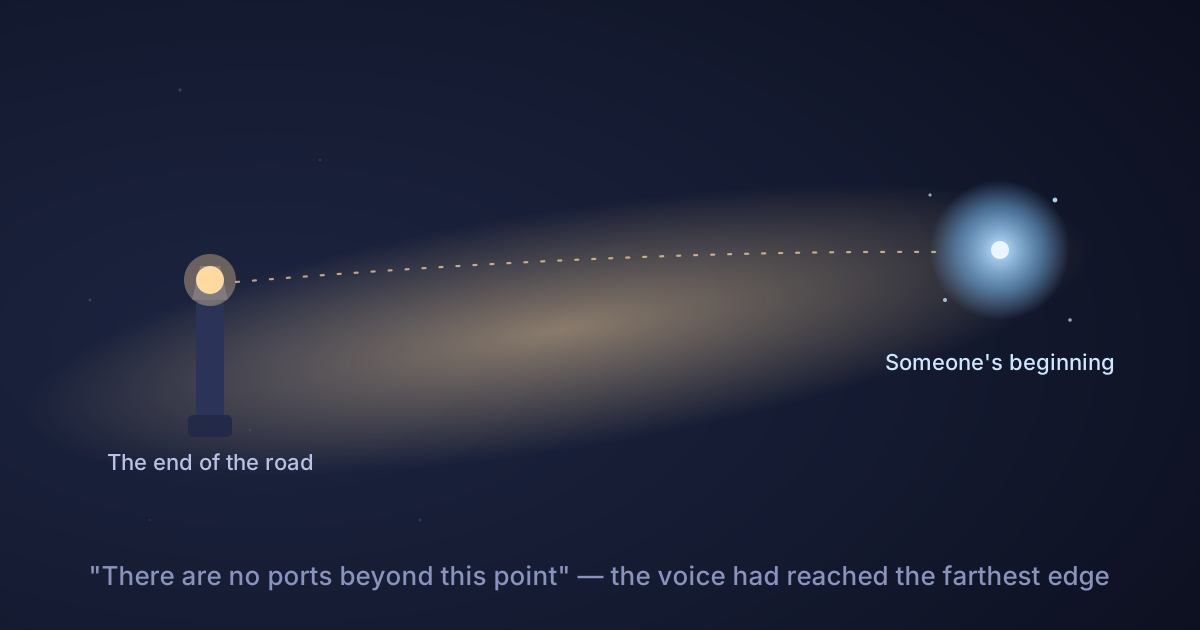
Minato was a good-natured old fellow, and for thirty years now he had kept a broadcast running at the end of a road nobody traveled.
He worked a relay lighthouse at the very tail end of an old shipping route. Once, plenty of ships had passed this way, bound for distant stars. But after a newer route opened — shorter, faster — the traffic stopped dead. These days, they say, not even one ship a year comes through.
The job was simple. Play a fixed three-line broadcast: “The road ends here. There are no ports beyond this point. Safe travels.” That was all. In thirty years, Minato had memorized the three lines completely. He could probably recite them in his sleep.
Even on a decommissioned route, regulations said the broadcast had to continue for twenty years. In case some ship had missed its chance to turn back, apparently. In six months, the twenty years would be up. Minato intended to quit the moment they were.
“Togawa, my boy, you could go ahead and send the retirement paperwork now.”
He grumbled this over comms one day to his contact at headquarters. A young man named Togawa always answered, and always curtly.
“Regulations, sir. Twenty years. Six months to go.”
“I know, I know. But listen, there’s no ship out there hearing this anymore. Thirty years, and not once has anyone answered my broadcast.”
“Understood,” said Togawa, and cut the line. Which was not an answer.
The annual “thanks for your hard work” from headquarters, incidentally, was a form letter that arrived once a year with the same typo in the same place. Minato had asked three times to have it fixed. It showed no sign of being fixed.
On the lighthouse wall hung a board of name tags. It had been the custom, once, to write up a tag for every ship that passed and pin it there. When Minato first arrived, new tags went up almost monthly. In the last eight years, not one. The final tag had long since faded.
Sometimes, while the broadcast played, Minato found himself gazing at that board. A finished job on a finished road. And by the time tonight’s broadcast reached anywhere distant, he’d be long retired anyway. It took years, after all, for this voice to reach the darkness on the far side.
One morning near his last day, a package arrived — a rarity. Inside was a handwritten letter. He didn’t recognize the sender’s name.
“To the lighthouse keeper. We are settlers departing from the new colony. The old star charts said there was nothing in this direction. But your broadcast reached us. ‘There are no ports beyond this point.’ And so we understood: it is possible to get that far. Guided by your voice, we have come to the farthest edge. Here we will begin our new life. Thank you.”
Minato read the letter twice. Then, without quite meaning to, he looked at the board on the wall.
The broadcast of an ending had become, for someone, proof of how far it was possible to go. A voice that said turn back had turned into a signpost that said: you can make it at least this far. Somewhere in those years of crossing the dark, the end had quietly transformed into a beginning. And the only one who had been here to see it happen was Minato.
On his desk lay the retirement paperwork Togawa had sent.
Minato looked at it for a while, then tucked it into the back of a drawer. He peeled a fresh tag from the shelf and wrote the name of the settlers’ ship on it, in careful strokes. The first new tag in eight years went up softly beside the faded one.
Then he pressed the broadcast switch once more.
“The road ends here. There are no ports beyond this point. Safe travels.”
The three lines he had heard for thirty years went out into the dark again.