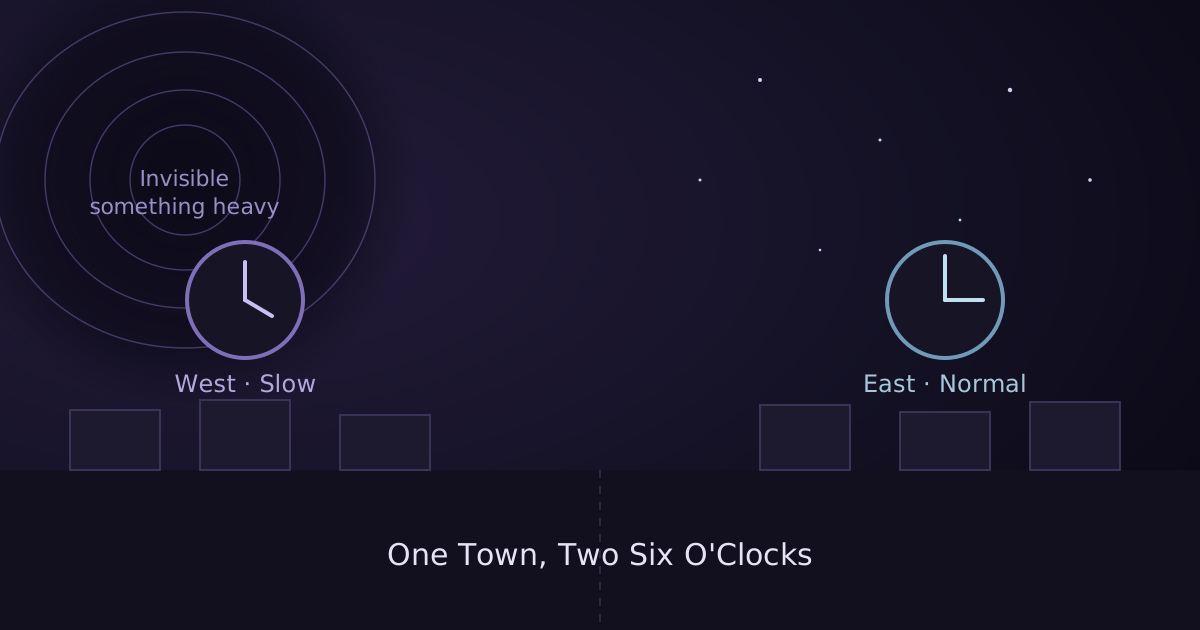
Old Masa was the most punctual man in town — until this spring, when his prized sense of timing started splitting the neighborhood in two.
Every morning at six sharp, he’d step outside and bellow “SIX O’CLOCK!” at the top of his lungs. That was it. That was the whole routine. But everyone in the housing block woke up to that voice and started their day by it. Alarm clocks never sold in this neighborhood — why bother, when you had Masa?
“Listen, Chika, time’s a thing you’ve got to keep exact.”
“Sure, sure.”
Chika answered with a yawn. It was six in the morning, after all. Fair enough.
Then one morning, that infallible voice hit its first snag.
“Old man, your six o’clock was a little late this morning,” said a woman who lived at the far west edge of town. Masa bristled.
“Late? Me? Sixty years and I haven’t been a second off.”
“Well, my clock said six-ten.”
“Same here.” “Ours too.”
One west-side house after another backed her up. But the east side told a completely different story.
“What are you talking about? If anything, he’s early. Always ahead of our clock.”
Masa checked every clock in his house. All of them agreed, down to the second. His eyes were fine. His ears were fine. And yet the west side called him late, the east side called him early. He didn’t sleep that night, or for several after.
It was old Ume who finally explained it, sipping her tea by the window at the far western edge of town.
“You don’t know? There’s something big and heavy sitting out past the western sky. Came from way out in space. Can’t see it, but it’s there.”
“So what if it’s heavy?”
“Time runs slower near something heavy. The closer you are, the slower it gets. That’s why we’re a little behind you folks on the east side.”
Masa’s jaw dropped. His voice had never been wrong. It was the town that had split into two separate times — the west running slow, the east running as it always had. One voice could no longer announce a single correct six o’clock to both sides at once.
“So which one am I supposed to go by?”
The town settled it without much fuss: west time for the west side, east time for the east. Just keep two clocks. That was all there was to it. Masa’s voice became the official east-side six o’clock, and nothing more.
That part, at least, went smoothly.
The trouble started after. People began quietly moving west.
“West side’s great. Time runs slow, so even if you sleep in a bit, you’re never technically late.”
“I hear Sundays last longer over there than here.”
“And best of all, you age slower. Have you noticed the west-siders all look younger?”
Before long, nobody wanted east-side time at all. It ran fast, shortened your weekends, and piled the years on quicker. Who’d want a deal like that? For sixty years, precision had been the one thing Masa could boast about. Now his “correct six o’clock” was the least popular six o’clock in town.
The next morning, six o’clock came and went. No voice.
Chika peeked out the window. There was Masa, hauling a cart piled with all his belongings, trudging toward the far western edge of town — right next door to old Ume. Perched on top of the load sat his prized clock.
“Where are you off to, old man?”
“West.” Masa gave the clock a pat and grinned. “Figured it’s about time I started living slow myself.”
Nobody on the east side has heard his six o’clock shout since. Instead, a lazy voice now drifts out from the far west edge of town, always about ten minutes past six.
”…Six o’clock. Well — more or less six o’clock.”
That was “more or less,” from a man who’d been exactly on time for sixty straight years. And every house on the west side, yawning along with him, listened all the same.