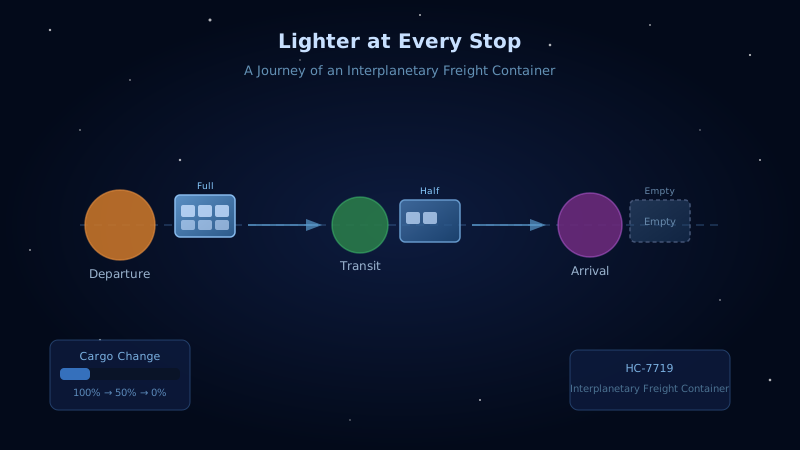
Among the interplanetary freight fleet, HC-7719 was a peculiar container. Five years in service, and not a single complaint.
A metal box: 1.2 meters tall, 0.8 meters wide, 0.9 meters deep. Its serial number was stamped into the top panel, and weight sensors sat at each corner. At every departure it logged the cargo; at every stop it shed what had been unloaded. That was the whole system. This trip, incidentally, was the first time it had traveled at full capacity since the day it was built — though HC-7719 had no function for recording that sort of thing.
This journey began at Kepler Municipality.
Total weight at departure: 183 kilograms. Twenty-four cases of canned fish packed in insulation, three crates of maintenance parts, twelve bags of miscellaneous household goods from what looked like someone’s moving shipment. Stuffed to capacity; the sensors registered a faint sense of pressure, though that was probably just normal.
The first offload point, Transit Port 2, sits at the edge of the Jovian sphere. All twenty-four cases of fish went off there. Weight dropped to 112 kilograms, and the automated announcement played twice: “Transfer surcharge applies — 880 credits.” The container itself, not having been designed to take pleasure in getting lighter, simply logged the number.
The next relay point was a temporary station in Mars orbit. Three crates of maintenance parts came off. Remaining weight: 37 kilograms. Nothing left but the moving bags.
The final destination was a logistics center on Ganymede — receiving dock on the second basement floor. A warehouse worker came to the door with a data terminal.
“HC-7719. Let me check the contents.”
He looked inside, then went quiet for a moment.
All twelve bags were still there. The weight still read 37 kilograms, but none of the cargo tracking codes listed Ganymede as the drop-off point. He scrolled through the manifest. Every single one: Recipient: forwarded due to change of address.
“Ah,” he said. “These are all forwarded. Wrong stop.”
And so all twelve bags were transferred to a different container. HC-7719 was empty. The sensors read 0.0 kilograms.
The man typed “Contents checked: none” into his terminal and signed off. Then he paused, opened another screen, and squinted at it.
“Hey, this thing itself is classified as precision equipment,” he said. “There’s a shipping destination listed for the container. Says packaging required.”
A colleague came out from the back of the warehouse with a roll of bubble wrap — the foam kind that makes a satisfying pop when you squeeze it.
HC-7719 eased back out of the warehouse, now wrapped in bubbles.
This story is set in a fictional interplanetary logistics network. It is about the thing that carries cargo becoming the cargo.